

Close Menu
  • News
      • Appointments
      • EV Powertrain
      • Emissions
      • Engine Components
      • Electronics
      • Expo
      • Facility Developments
      • Forced Induction
      • Fuel Cell Technologies
      • Fuels & Lubricants
      • Heavy-duty & Diesel Engine Technologies
      • Hybrid Powertrain Technologies
      • Industry Forecasting
      • Legislation
      • Materials & Surface Treatment
      • Metallurgy
      • Mild-hybrid & 48V Technologies
      • New powertrain
      • Partnerships, Investments & Acquisitions
      • Quality Control
      • Prototyping
      • Sustainable fuels
      • Testing
      • Traction Control Systems
      • Transmissions Technologies
      • Webinars
  • Features
  • Online Magazines
    • April 2026
    • January 2026
    • September 2025
    • June 2025
    • March 2025
    • January 2025
    • September 2024
    • Subscribe to Automotive Powertrain Technology
    • Transmission Technology International
    • Subscribe to Transmission Technology
  • Opinion
  • Supplier Spotlight
  • Webinars
Facebook X (Twitter) Instagram
  • Automotive Interiors
  • Automotive Testing
  • Autonomous Vehicle
  • Professional Motorsport
  • Tire Technology
  • Media Pack
LinkedIn
Subscribe
Automotive Powertrain Technology International
  • News
      • Appointments
      • EV Powertrain
      • Emissions
      • Engine Components
      • Electronics
      • Expo
      • Facility Developments
      • Forced Induction
      • Fuel Cell Technologies
      • Fuels & Lubricants
      • Heavy-duty & Diesel Engine Technologies
      • Hybrid Powertrain Technologies
      • Industry Forecasting
      • Legislation
      • Materials & Surface Treatment
      • Metallurgy
      • Mild-hybrid & 48V Technologies
      • New powertrain
      • Partnerships, Investments & Acquisitions
      • Quality Control
      • Prototyping
      • Sustainable fuels
      • Testing
      • Traction Control Systems
      • Transmissions Technologies
      • Webinars
  • Features
  • Online Magazines
    1. April 2026
    2. January 2026
    3. September 2025
    4. June 2025
    5. March 2025
    6. January 2025
    7. September 2024
    8. Subscribe to Automotive Powertrain Technology
    9. Transmission Technology International
    10. Subscribe to Transmission Technology
    Featured

    In this Issue – April 2026

    By Web TeamMay 1, 2026
    Recent

    In this Issue – April 2026

    May 1, 2026

    In this Issue – January 2026

    December 3, 2025

    In this Issue – September 2025

    September 25, 2025
  • Opinion
  • Supplier Spotlight
  • Webinars
LinkedIn Facebook
Subscribe
Automotive Powertrain Technology International
New Engine

Next-Gen BMW X5 enters final test phase

Zahra AwanBy Zahra AwanJune 20, 20264 Mins Read
LinkedIn Twitter Facebook Email
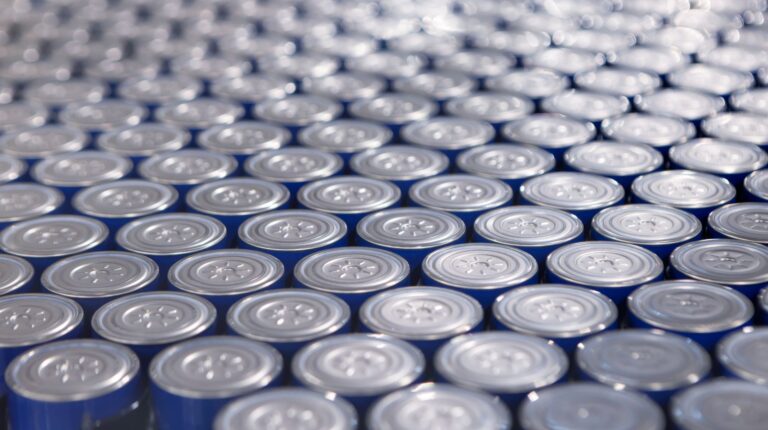
A large number of grey battery cells stacked on their ends.
Share
LinkedIn Twitter Facebook Email

BMW has announced that the X5 has entered the finishing straight of its development program, including final calibration drives around its production base at Plant Spartanburg in the USA. The auto maker has also confirmed that the X5’s carbon footprint has been cut by around 40% compared with industry averages, driven by a sweeping overhaul of its supply chain, production processes and battery technology. The vehicle’s sustainability credentials are supported further by the iX5’s sixth-generation eDrive technology, Gen6, which features an 800V battery architecture that delivers 30% faster charging and 30% greater range, the auto maker.

Gen6 battery cells with reduced carbon footprint

The Gen6 battery cells used in the iX5’s high-voltage battery – which were unveiled in 2025 and designed for Neu Klasse vehicles before being rolled out across the auto maker’s electric vehicle portfolio – include a high proportion of secondary materials in the cobalt, lithium and nickel content. Renewable energy has also been also used in the production of anode and cathode materials, as well as in cell manufacturing. Compared with the Gen5 cell used in the BMW iX, CO2e emissions have been reduced by around 28% per watt-hour.

Efficiency during use phase 

The BMW iX5 incorporates the auto maker’s EfficientDynamics technology package, which improves vehicle efficiency across key systems, including aerodynamics, lightweight construction, low rolling-resistance wheels and tires, and overall energy management.

The vehicle also features BMW’s “Heart of Joy” control unit and the in-house-developed BMW Dynamic Performance Control driving stack, technologies shared with the BMW iX3 and BMW i3. These systems are designed to enhance drivability, providing smooth acceleration and braking while improving energy efficiency. During deceleration, the vehicle can recover more energy through regenerative braking across a wider range of driving conditions, including down to a complete stop.

Supply chain decarbonization as key lever

Targeted decarbonization throughout the supply chain is a key lever for reducing CO2e emissions. The BMW Group is focusing in particular on renewable energy and secondary materials, as well as product and process innovations. During the product development process, CO2e emissions of the BMW X5 were reduced by around 40%.

A further advance is the increased use of CO2e-reduced flat steel. Around 50% of the flat steel used in the BMW X5 is electric arc furnace steel (EAF steel) with a high proportion of secondary material, produced using renewable energy. The high share of CO2e-reduced flat steel is the result of close, long-standing collaboration with local suppliers in North America.

Systematic use of secondary materials 

The X5 achieves a high proportion of secondary raw materials, even in heavy-duty components. These include aluminum suspension components such as wheel rims, swivel bearings, wheel supports, rear axle supports and brake callipers, which are manufactured using renewable energy for both electrolysis and production.

The aluminum used for the doors of the BMW X5 contains 35% recycled and closed-loop material from BMW Spartanburg’s press shop. The base material used for the yarn of the headliner fabric is made from 100% recycled PET. In the battery-electric BMW iX5 60 xDrive, around one third of the total vehicle is made up of secondary raw materials, equivalent to a weight of 940kg.

Carbon payback period

Comprehensive decarbonization measures across the supply chain, production and use phase result in an early breakeven point. Depending on the drivetrain variant, annual mileage and source of the electricity used for charging, the BMW iX5 60 xDrive achieves a CO2e advantage over a comparable model with an internal combustion engine after approximately one to two years of use.

The BMW Group will publish the Product Carbon Footprint for the BMW X5, validated by the German Technical Inspection Association (TÜV), to accompany the series launch.

Related news, Shell unveils Triple 10 Challenge EV concept

Share. LinkedIn Twitter Facebook Email

Related Posts

Shell unveils Triple 10 Challenge EV concept

June 26, 2026

Maserati unveils updated Grecale, GranTurismo and GranCabrio

June 22, 2026

BYD enters Europe’s B-segment with Dolphin G DM-I

June 11, 2026
LATEST NEWS

Shell unveils Triple 10 Challenge EV concept

June 26, 2026

Superlight secures US$21m for middle-mile EV featuring fully digital powertrain

June 25, 2026

Maserati unveils updated Grecale, GranTurismo and GranCabrio

June 22, 2026

Receive breaking stories and features in your inbox each week, for free


Enter your email address:


Supplier Spotlights
  • VOSS Automotive, Inc.
Featured Listings
  • There are currently no listings to show.
Getting in Touch
  • Contact Us
  • Media Pack
  • Meet the Editors
  • Free Weekly E-Newsletter
Our Social Channels
  • LinkedIn
Related UKi Topics
  • Automotive Interiors
  • Automotive Testing
  • Autonomous Vehicle
  • Professional Motorsport
  • Tire Technology
  • Media Pack
© 2026 UKi Media & Events a division of UKIP Media & Events Ltd
  • Terms and Conditions
  • Privacy Policy
  • Cookie Policy
  • Notice and Takedown Policy

Type above and press Enter to search. Press Esc to cancel.