
Close Menu
  • News
      • Appointments
      • EV Powertrain
      • Emissions
      • Engine Components
      • Electronics
      • Facility Developments
      • Forced Induction
      • Fuel Cell Technologies
      • Fuels & Lubricants
      • Heavy-duty & Diesel Engine Technologies
      • Hybrid Powertrain Technologies
      • Industry Forecasting
      • Legislation
      • Materials & Surface Treatment
      • Metallurgy
      • Mild-hybrid & 48V Technologies
      • New powertrain
      • Partnerships, Investments & Acquisitions
      • Quality Control
      • Prototyping
      • Sustainable fuels
      • Testing
      • Traction Control Systems
      • Transmissions Technologies
      • Webinars
  • Features
  • Online Magazines
    • April 2026
    • January 2026
    • September 2025
    • June 2025
    • March 2025
    • January 2025
    • September 2024
    • Subscribe to Automotive Powertrain Technology
    • Transmission Technology International
    • Subscribe to Transmission Technology
  • Opinion
  • Supplier Spotlight
  • Webinars
Facebook X (Twitter) Instagram
  • Automotive Interiors
  • Automotive Testing
  • Autonomous Vehicle
  • Professional Motorsport
  • Tire Technology
  • Media Pack
LinkedIn
Subscribe
Automotive Powertrain Technology International
  • News
      • Appointments
      • EV Powertrain
      • Emissions
      • Engine Components
      • Electronics
      • Facility Developments
      • Forced Induction
      • Fuel Cell Technologies
      • Fuels & Lubricants
      • Heavy-duty & Diesel Engine Technologies
      • Hybrid Powertrain Technologies
      • Industry Forecasting
      • Legislation
      • Materials & Surface Treatment
      • Metallurgy
      • Mild-hybrid & 48V Technologies
      • New powertrain
      • Partnerships, Investments & Acquisitions
      • Quality Control
      • Prototyping
      • Sustainable fuels
      • Testing
      • Traction Control Systems
      • Transmissions Technologies
      • Webinars
  • Features
  • Online Magazines
    1. April 2026
    2. January 2026
    3. September 2025
    4. June 2025
    5. March 2025
    6. January 2025
    7. September 2024
    8. Subscribe to Automotive Powertrain Technology
    9. Transmission Technology International
    10. Subscribe to Transmission Technology
    Featured

    In this Issue – April 2026

    By Web TeamMay 1, 2026
    Recent

    In this Issue – April 2026

    May 1, 2026

    In this Issue – January 2026

    December 3, 2025

    In this Issue – September 2025

    September 25, 2025
  • Opinion
  • Supplier Spotlight
  • Webinars
LinkedIn Facebook
Subscribe
Automotive Powertrain Technology International
Hybrid Powertrain Technologies

Next gen Prius plug-in hybrid features all-new dual motor drive

Dean SlavnichBy Dean SlavnichFebruary 8, 20172 Mins Read
LinkedIn Twitter Facebook Email
Share
LinkedIn Twitter Facebook Email

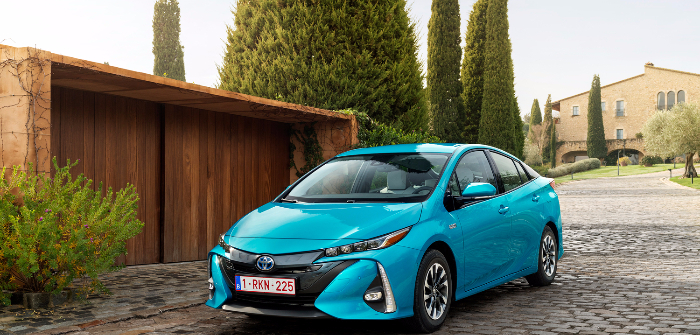
Toyota has unveiled the second generation Prius plug-in hybrid which the auto maker claims can cover double the distance – more than 30 miles – and achieve much higher speeds in all-electric driving mode.

The new model is built on the same Toyota New Global Architecture platform as the standard, full hybrid Prius. It houses a revolutionary dual motor EV drive system and a battery warming system as well as an EV range-extending solar roof, and gas injection heat pump air conditioning.

The innovative dual motor drive system is said to increase EV power by around 83%. A highly compact, one-way gear within the transaxle enables the hybrid system generator to act as a second electric motor. This boosts EV driving power, providing improved acceleration, more engaging performance and a higher maximum EV speed of 84mph.

The large-capacity lithium-ion battery, located under the rear load space, helps to increase the vehicle’s range; its capacity has been doubled from 4.4 to 8.8kW/h, yet its volume has only increased by two thirds – from 87 to 145 liters.

During charging, a new battery warming system will bring the cells up to an efficient working temperature, even when external temperatures drop as low as -20°C. This ensures battery power and efficiency are maintained at a sufficient level to minimize the impact of cold weather on driving range, with full power available from start-off.

The increase in maximum power from 2.0 to 3.3kW means the battery can be fully charged up to 65% more quickly – in two hours when using the Type II Mode III Mennekes connector, or 3 hours 10 minutes using a standard household plug socket.

The solar roof can be fitted with a large solar panel to generate electricity to charge the hybrid battery. When the vehicle is parked (but not plugged in to a charging socket), the solar roof charges an intermediate solar battery. When this is fully charged, it will deliver a pumping charge to the main hybrid battery.

February 8, 2017

Share. LinkedIn Twitter Facebook Email

Related Posts

New chassis and powertrain event to launch at Vehicle Tech Week North America 2026

May 6, 2026

AI-defined vehicles and expanded electrification shape Nissan’s future mobility strategy

April 20, 2026

TraXon 2 hybrid demonstrates emissions reduction potential for heavy commercial vehicles

April 16, 2026
LATEST NEWS

Renault introduces LPG bi-fuel Clio that delivers up to 1,450km range

May 7, 2026

UK consortium secures funding for ReCAM lithium-ion battery recycling project

May 7, 2026

BorgWarner wins turbocharger contracts with two European OEMs

May 7, 2026

Receive breaking stories and features in your inbox each week, for free


Enter your email address:


Supplier Spotlights
  • TREMEC
Featured Listings
  • There are currently no listings to show.
Getting in Touch
  • Contact Us
  • Media Pack
  • Meet the Editors
  • Free Weekly E-Newsletter
Our Social Channels
  • LinkedIn
Related UKi Topics
  • Automotive Interiors
  • Automotive Testing
  • Autonomous Vehicle
  • Professional Motorsport
  • Tire Technology
  • Media Pack
© 2026 UKi Media & Events a division of UKIP Media & Events Ltd
  • Terms and Conditions
  • Privacy Policy
  • Cookie Policy
  • Notice and Takedown Policy

Type above and press Enter to search. Press Esc to cancel.