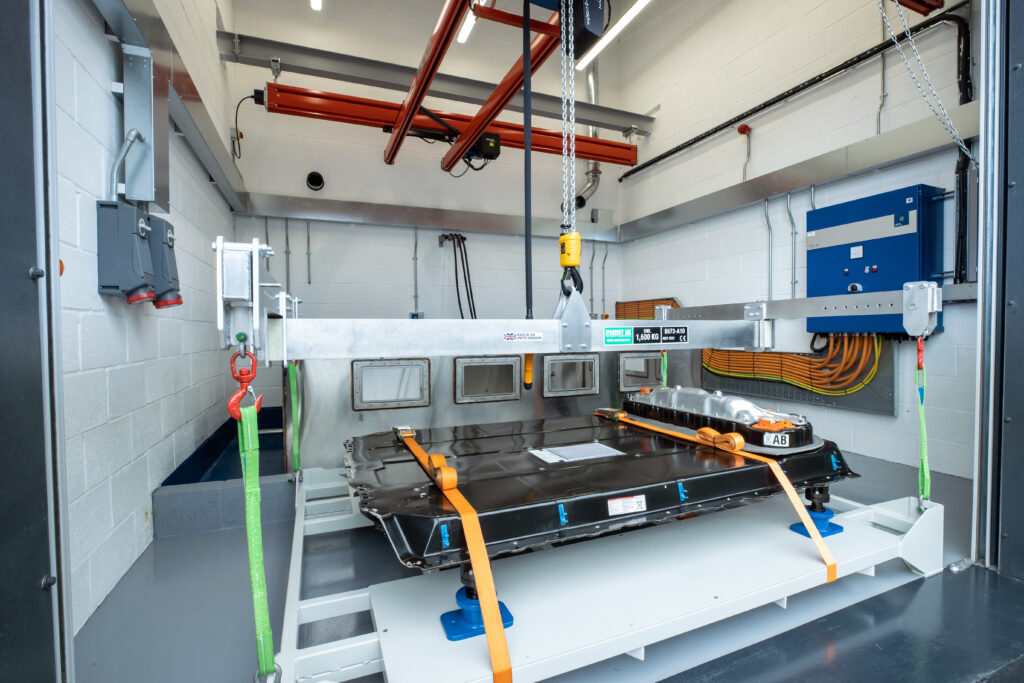

The powertrain performance of the modern hypercar is now typically shaped as much by the vehicle’s electrical architecture as by its engine. As small-series manufacturers pursue power outputs, acceleration times and throttle response rates once confined to top-tier motorsport, the demand for bespoke, extreme performance in battery engineering has grown sharply. Mahle Powertrain, an engineering consultancy based in Northampton in the UK, has expanded its portfolio to meet that demand, adding high-voltage battery development using Formula 1-grade high-performance cells to a technology capability that already spans internal combustion, hybrid, full-electric and fuel-cell powertrains.
A race-derived battery for a hybrid hypercar program
The company’s first project in this space, almost a decade ago, was the design and manufacture of a very high-specific-performance battery for a 48V mild-hybrid car, designed to recover almost all the braking energy available during the World-harmonized Light-vehicle Test Procedure (WLTP) driving cycle. Today the company is actively engaged in developing a battery pack with extreme performance capability, using a Formula 1-grade battery cell. The pack, developed specifically for a limited-run hybrid electric hypercar, can output electrical power at a rate of up to 600bhp (450kW), and stores 4.1kWh of usable energy. The pack is arranged as three modules of 128 cells each, in a 64S2P layout, giving the overall pack a 192S2P architecture, to achieve a system voltage of 800V.
ICE expertise applied to high-voltage design
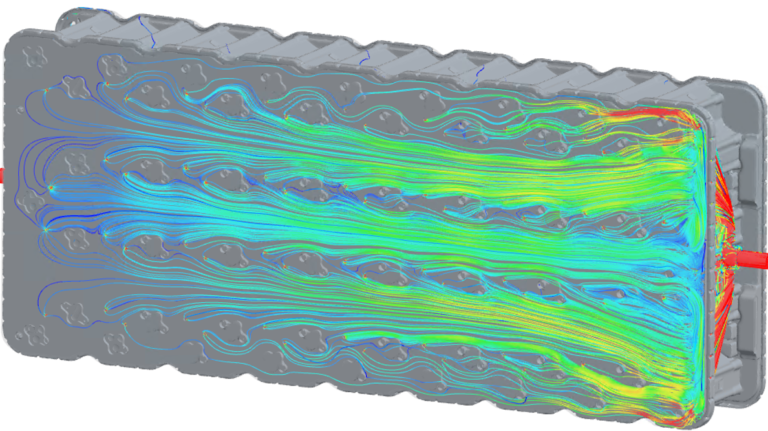
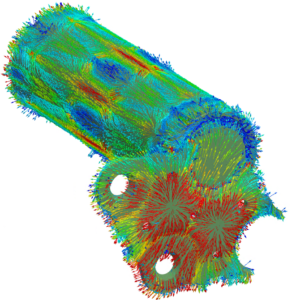
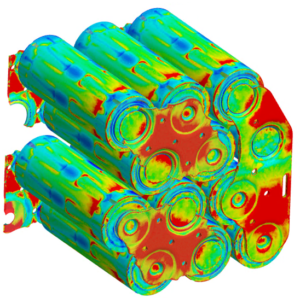
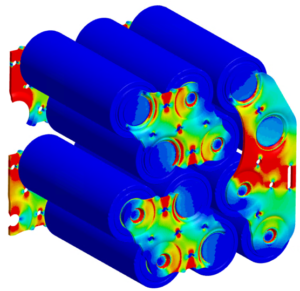
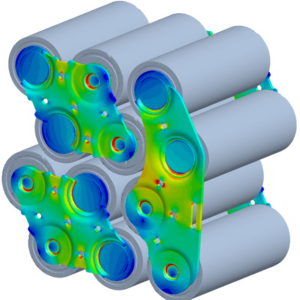
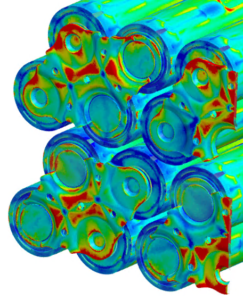
Much of the underlying engineering draws on the company’s decades of internal combustion work. Rather than a conventional cold-plate approach, the cells sit in direct contact with a dielectric fluid, delivering more uniform temperatures across the pack and higher sustained power under load. The pack was developed using specialist electro-thermal and structural simulation, with 3D analysis used to optimize coolant flow around the cells to achieve even heat dissipation, using techniques developed over decades, for optimization of ICE cylinder-head coolant flows. Analysis was conducted to ensure that, even under repeated peak performance operation, such as repeated laps of the Nürburgring, the battery cooling system and thermal management strategy were not the limiting factors for the vehicle.
Modular architecture built for reuse
Every element of the pack is tailored to the hypercar’s tightly packaged installation, but the underlying architecture has been designed for reconfiguration. Cell type, module count and geometry can all be adjusted, allowing the same engineering framework to be applied to other high-performance vehicle programs.
The project demonstrates the growing breadth of Mahle Powertrain’s capabilities and its ability to deliver race-derived engineering for the road.