

Close Menu
  • News
      • Appointments
      • EV Powertrain
      • Emissions
      • Engine Components
      • Electronics
      • Facility Developments
      • Forced Induction
      • Fuel Cell Technologies
      • Fuels & Lubricants
      • Heavy-duty & Diesel Engine Technologies
      • Hybrid Powertrain Technologies
      • Industry Forecasting
      • Legislation
      • Materials & Surface Treatment
      • Metallurgy
      • Mild-hybrid & 48V Technologies
      • New powertrain
      • Partnerships, Investments & Acquisitions
      • Quality Control
      • Prototyping
      • Sustainable fuels
      • Testing
      • Traction Control Systems
      • Transmissions Technologies
      • Webinars
  • Features
  • Online Magazines
    • April 2026
    • January 2026
    • September 2025
    • June 2025
    • March 2025
    • January 2025
    • September 2024
    • Subscribe to Automotive Powertrain Technology
    • Transmission Technology International
    • Subscribe to Transmission Technology
  • Opinion
  • Events
  • Supplier Spotlight
  • Webinars
Facebook X (Twitter) Instagram
  • Automotive Interiors
  • Automotive Testing
  • Autonomous Vehicle
  • Professional Motorsport
  • Tire Technology
  • Media Pack
LinkedIn
Subscribe
Automotive Powertrain Technology International
  • News
      • Appointments
      • EV Powertrain
      • Emissions
      • Engine Components
      • Electronics
      • Facility Developments
      • Forced Induction
      • Fuel Cell Technologies
      • Fuels & Lubricants
      • Heavy-duty & Diesel Engine Technologies
      • Hybrid Powertrain Technologies
      • Industry Forecasting
      • Legislation
      • Materials & Surface Treatment
      • Metallurgy
      • Mild-hybrid & 48V Technologies
      • New powertrain
      • Partnerships, Investments & Acquisitions
      • Quality Control
      • Prototyping
      • Sustainable fuels
      • Testing
      • Traction Control Systems
      • Transmissions Technologies
      • Webinars
  • Features
  • Online Magazines
    1. April 2026
    2. January 2026
    3. September 2025
    4. June 2025
    5. March 2025
    6. January 2025
    7. September 2024
    8. Subscribe to Automotive Powertrain Technology
    9. Transmission Technology International
    10. Subscribe to Transmission Technology
    Featured

    In this Issue – April 2026

    By Web TeamMay 1, 2026
    Recent

    In this Issue – April 2026

    May 1, 2026

    In this Issue – January 2026

    December 3, 2025

    In this Issue – September 2025

    September 25, 2025
  • Opinion
  • Events
  • Supplier Spotlight
  • Webinars
LinkedIn Facebook
Subscribe
Automotive Powertrain Technology International
Fuel Cell Technologies

Toyota fuel cells receive ANSI/CSA certification for stationary power applications

Zahra AwanBy Zahra AwanApril 30, 20262 Mins Read
LinkedIn Twitter Facebook Email
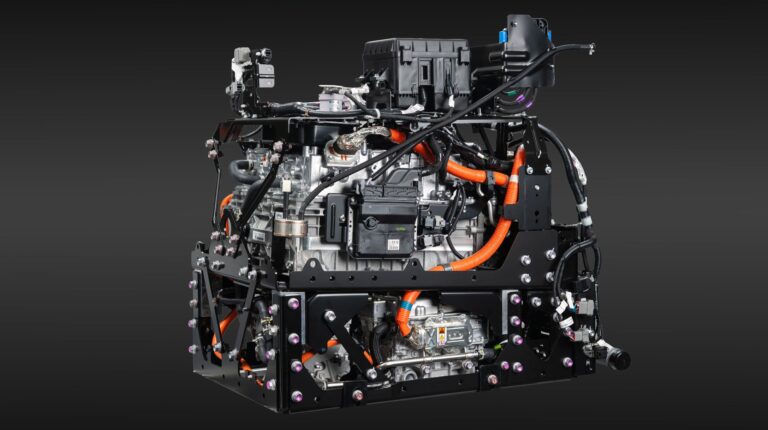
Toyota hydrogen fuel cell.
Share
LinkedIn Twitter Facebook Email

Toyota Hydrogen Solutions has announced that its fuel cells have earned ANSI/CSA FC 1 and ANSI/CSA FC 6 certification.

The certifications validate the specific safety and compliance standards set forth by the American National Standards Institute (ANSI) and CSA Group, a worldwide standards organization based in Canada.

“With our stationary Toyota fuel cell earning ANSI/CSA FC 1 and FC 6 certifications, there’s now a significantly lower barrier to adoption [of stationary power generator applications],” said Thibaut de Barros Conti, vice president of Toyota Hydrogen Solutions. “These rigorous certifications should put customers at ease when it comes time for their businesses to make investments into more environmentally conscious power generation.”

Hydrogen fuel cells provide an alternative to traditional combustion power generation, with potentially lower environmental impact, depending on how the hydrogen is produced. They work by combining gaseous hydrogen and oxygen in an electrochemical process to produce electricity, resulting in only water vapor as exhaust.

Stationary fuel cell power generators are often allowed to operate with fewer restrictions than traditional internal combustion generators, given they create no carbon emissions at the point of use and produce fewer sound emissions. As fuel cells are often allowed to operate without interruption as long as there’s a fuel source, they can help with peak shaving – augmenting the electrical grid – or even serve as a remote power source in areas not connected to a grid, such as disaster response sites or remote facilities.

In related news, BorgWarner secures long-term supply agreement with off-highway OEM

Share. LinkedIn Twitter Facebook Email

Related Posts

Major US hydrogen truck deployment announced by Toyota and Hyroad

May 7, 2026

Partnership to advance hydrogen mobility and research at Georgia Institute of Technology

April 30, 2026

Project Cavendish: Mahle hydrogen-fueled 13-liter engine matches diesel performance

April 23, 2026
LATEST NEWS

Renault introduces LPG bi-fuel Clio that delivers up to 1,450km range

May 7, 2026

UK consortium secures funding for ReCAM lithium-ion battery recycling project

May 7, 2026

BorgWarner wins turbocharger contracts with two European OEMs

May 7, 2026

Receive breaking stories and features in your inbox each week, for free


Enter your email address:


Supplier Spotlights
  • teamtechnik
Featured Listings
  • There are currently no listings to show.
Getting in Touch
  • Contact Us
  • Media Pack
  • Meet the Editors
  • Free Weekly E-Newsletter
Our Social Channels
  • LinkedIn
Related UKi Topics
  • Automotive Interiors
  • Automotive Testing
  • Autonomous Vehicle
  • Professional Motorsport
  • Tire Technology
  • Media Pack
© 2026 UKi Media & Events a division of UKIP Media & Events Ltd
  • Terms and Conditions
  • Privacy Policy
  • Cookie Policy
  • Notice and Takedown Policy

Type above and press Enter to search. Press Esc to cancel.