

Close Menu
  • News
      • Appointments
      • EV Powertrain
      • Emissions
      • Engine Components
      • Electronics
      • Facility Developments
      • Forced Induction
      • Fuel Cell Technologies
      • Fuels & Lubricants
      • Heavy-duty & Diesel Engine Technologies
      • Hybrid Powertrain Technologies
      • Industry Forecasting
      • Legislation
      • Materials & Surface Treatment
      • Metallurgy
      • Mild-hybrid & 48V Technologies
      • New powertrain
      • Partnerships, Investments & Acquisitions
      • Quality Control
      • Prototyping
      • Sustainable fuels
      • Testing
      • Traction Control Systems
      • Transmissions Technologies
      • Webinars
  • Features
  • Online Magazines
    • April 2026
    • January 2026
    • September 2025
    • June 2025
    • March 2025
    • January 2025
    • September 2024
    • Subscribe to Automotive Powertrain Technology
    • Transmission Technology International
    • Subscribe to Transmission Technology
  • Opinion
  • Supplier Spotlight
  • Webinars
Facebook X (Twitter) Instagram
  • Automotive Interiors
  • Automotive Testing
  • Autonomous Vehicle
  • Professional Motorsport
  • Tire Technology
  • Media Pack
LinkedIn
Subscribe
Automotive Powertrain Technology International
  • News
      • Appointments
      • EV Powertrain
      • Emissions
      • Engine Components
      • Electronics
      • Facility Developments
      • Forced Induction
      • Fuel Cell Technologies
      • Fuels & Lubricants
      • Heavy-duty & Diesel Engine Technologies
      • Hybrid Powertrain Technologies
      • Industry Forecasting
      • Legislation
      • Materials & Surface Treatment
      • Metallurgy
      • Mild-hybrid & 48V Technologies
      • New powertrain
      • Partnerships, Investments & Acquisitions
      • Quality Control
      • Prototyping
      • Sustainable fuels
      • Testing
      • Traction Control Systems
      • Transmissions Technologies
      • Webinars
  • Features
  • Online Magazines
    1. April 2026
    2. January 2026
    3. September 2025
    4. June 2025
    5. March 2025
    6. January 2025
    7. September 2024
    8. Subscribe to Automotive Powertrain Technology
    9. Transmission Technology International
    10. Subscribe to Transmission Technology
    Featured

    In this Issue – April 2026

    By Web TeamMay 1, 2026
    Recent

    In this Issue – April 2026

    May 1, 2026

    In this Issue – January 2026

    December 3, 2025

    In this Issue – September 2025

    September 25, 2025
  • Opinion
  • Supplier Spotlight
  • Webinars
LinkedIn Facebook
Subscribe
Automotive Powertrain Technology International
Engine Components

Mahle introduces latest iteration of Jet Ignition system

Lawrence ButcherBy Lawrence ButcherOctober 6, 20203 Mins Read
LinkedIn Twitter Facebook Email
Share
LinkedIn Twitter Facebook Email

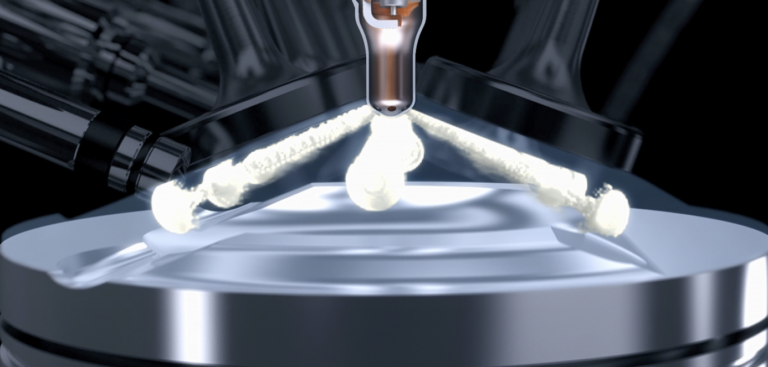
Mahle Powertrain has revealed that the latest iteration of its Jet Ignition system can be integrated into existing engine designs with only minimal changes to the final machining process. According to the company, continued work throughout the lockdown period means that passive MJI can now be installed as a press-in unit into engines utilizing an M12 sparkplug, or larger.

“As the automotive industry seeks ways to unlock incremental efficiency and performance benefits from the internal combustion engine, jet – or pre-chamber – ignition technology is rising to the fore,” explained the company’s head of new technology and data management, Adrian Cooper. “We are beginning to see jet ignition being adopted into high-end production powertrains, such as Maserati’s recent Nettuno V6.”

Mahle has been developing its novel MJI pre-chamber ignition technology for over a decade, and the company notes it can be used as either a passive or active system, suitable for use with either port or direct fuel injection systems.

“We have worked with manufacturers and pinnacle motorsport such as F1 on the integration of this technology for close to 10 years,” added Cooper. “However, our recent work on passive MJI makes the technology more accessible for adoption by mass-produced engines even as a retro-fit to existing designs, as part of a highly efficient powertrain.”

The passive MJI system features a small pre-chamber, which when ignited discharges extremely fast-moving, heated jets through a series of nozzles. This provides multiple ignition sites within the main combustion chamber, which leads to rapid, highly stable combustion and significantly improved knock mitigation characteristics. This enables the use of a higher compression ratio and in testing, up to a 10% reduction in fuel consumption has been measured.

“We have also used the opportunity during the pandemic to further develop the cold-start and emissions performance,” continued Cooper. “Through careful development, we’ve been able to engineer a system that operates under these conditions without requiring a second ignition source, enabling the system to be applied to existing cylinder heads without the requirement for costly re-engineering. We have adapted an MJI-equipped production engine to start, run and perform reliably at -8°C with equivalent catalyst light-off capability to conventional spark ignition. This is very encouraging, and we’ll be continuing development to lower this figure substantially.”

Cooper stressed that the key to maximizing the benefits of MJI is to understand the vehicle manufacturer’s requirements and develop the correct combustion strategy accordingly. “Our experience of integrating these systems means we can tailor MJI to many different applications, from low-cost hybrid ICE to downsized, high specific power engines or even to heavy-duty gas engines. While the engineering effort to integrate the MJI system has been simplified, other engine systems need to be further optimized in order to gain the largest benefits, which might include higher compression ratio, revised inlet camshaft profile and re-matching of the boosting system. A whole system engineering approach is the way to get the best from MJI.”

The company says it is now working on the development of a demonstrator engine to showcase the technology’s potential in applications between 80kW to 120kW.

Share. LinkedIn Twitter Facebook Email

Related Posts

BorgWarner wins turbocharger contracts with two European OEMs

May 7, 2026

BorgWarner secures long-term supply agreement with off-highway OEM

April 23, 2026

Marelli showcases latest propulsion and thermal management innovations

April 22, 2026
LATEST NEWS

Renault introduces LPG bi-fuel Clio that delivers up to 1,450km range

May 7, 2026

UK consortium secures funding for ReCAM lithium-ion battery recycling project

May 7, 2026

BorgWarner wins turbocharger contracts with two European OEMs

May 7, 2026

Receive breaking stories and features in your inbox each week, for free


Enter your email address:


Supplier Spotlights
  • Mitsubishi Heavy Industries Machine Tool (MAT)
Featured Listings
  • There are currently no listings to show.
Getting in Touch
  • Contact Us
  • Media Pack
  • Meet the Editors
  • Free Weekly E-Newsletter
Our Social Channels
  • LinkedIn
Related UKi Topics
  • Automotive Interiors
  • Automotive Testing
  • Autonomous Vehicle
  • Professional Motorsport
  • Tire Technology
  • Media Pack
© 2026 UKi Media & Events a division of UKIP Media & Events Ltd
  • Terms and Conditions
  • Privacy Policy
  • Cookie Policy
  • Notice and Takedown Policy

Type above and press Enter to search. Press Esc to cancel.