
Close Menu
  • News
      • Appointments
      • EV Powertrain
      • Emissions
      • Engine Components
      • Electronics
      • Facility Developments
      • Forced Induction
      • Fuel Cell Technologies
      • Fuels & Lubricants
      • Heavy-duty & Diesel Engine Technologies
      • Hybrid Powertrain Technologies
      • Industry Forecasting
      • Legislation
      • Materials & Surface Treatment
      • Metallurgy
      • Mild-hybrid & 48V Technologies
      • New powertrain
      • Partnerships, Investments & Acquisitions
      • Quality Control
      • Prototyping
      • Sustainable fuels
      • Testing
      • Traction Control Systems
      • Transmissions Technologies
      • Webinars
  • Features
  • Online Magazines
    • April 2026
    • January 2026
    • September 2025
    • June 2025
    • March 2025
    • January 2025
    • September 2024
    • Subscribe to Automotive Powertrain Technology
    • Transmission Technology International
    • Subscribe to Transmission Technology
  • Opinion
  • Supplier Spotlight
  • Webinars
Facebook X (Twitter) Instagram
  • Automotive Interiors
  • Automotive Testing
  • Autonomous Vehicle
  • Professional Motorsport
  • Tire Technology
  • Media Pack
LinkedIn
Subscribe
Automotive Powertrain Technology International
  • News
      • Appointments
      • EV Powertrain
      • Emissions
      • Engine Components
      • Electronics
      • Facility Developments
      • Forced Induction
      • Fuel Cell Technologies
      • Fuels & Lubricants
      • Heavy-duty & Diesel Engine Technologies
      • Hybrid Powertrain Technologies
      • Industry Forecasting
      • Legislation
      • Materials & Surface Treatment
      • Metallurgy
      • Mild-hybrid & 48V Technologies
      • New powertrain
      • Partnerships, Investments & Acquisitions
      • Quality Control
      • Prototyping
      • Sustainable fuels
      • Testing
      • Traction Control Systems
      • Transmissions Technologies
      • Webinars
  • Features
  • Online Magazines
    1. April 2026
    2. January 2026
    3. September 2025
    4. June 2025
    5. March 2025
    6. January 2025
    7. September 2024
    8. Subscribe to Automotive Powertrain Technology
    9. Transmission Technology International
    10. Subscribe to Transmission Technology
    Featured

    In this Issue – April 2026

    By Web TeamMay 1, 2026
    Recent

    In this Issue – April 2026

    May 1, 2026

    In this Issue – January 2026

    December 3, 2025

    In this Issue – September 2025

    September 25, 2025
  • Opinion
  • Supplier Spotlight
  • Webinars
LinkedIn Facebook
Subscribe
Automotive Powertrain Technology International
Electric Powertrain Technologies

Volvo upgrades fully electric and hybrid cars; streamlines model names

Izzy WoodBy Izzy WoodFebruary 21, 20242 Mins Read
LinkedIn Twitter Facebook Email
Share
LinkedIn Twitter Facebook Email

Volvo Cars has announced a series of upgrades to its fully electric and hybrid cars, aligning with its commitment to becoming a fully electric car manufacturer by 2030.

The manufacturer is also introducing a Performance software pack for its electric EX40 and EC40 Twin Motor variants, boosting power output by 25kW for quicker acceleration. The software pack includes unique pedal mapping for enhanced accelerator response and a dedicated ‘Performance’ drive mode to use the full 325kW.

The software upgrade will be offered as an optional upgrade pack via the Volvo Cars app when ordering a new car or for purchase and download for previous model year 2024 C40 and fully electric XC40 Recharge cars.

As part of the auto maker’s electrification effort, the model names for fully electric cars have been standardized. The fully electric XC40 Recharge and C40 Recharge models will now be known as the EX40 and EC40, respectively, bringing them in line with other fully electric models in the line-up: the EX30, EX90 and EM90.

The Recharge badging will also be removed from plug-in hybrid models, which will now be identified by the T6 or T8 suffix denoting different power output levels. This update is intended to simplify the distinction between fully electric and hybrid models.

There are changes to hybrid models too, with the B5 mild hybrid petrol variants of XC60 and XC90 benefiting from a more efficient engine combustion cycle. Volvo states this will reduce CO2  emissions and fuel consumption by up to 4% for the XC60 and around 2% for the XC90, based on the WLTP cycle.

“By aligning our trailblazing first electric models with the rest of our electric car portfolio, we simplify choice for consumers as we continue to electrify our line-up and refresh our hybrids,” said Björn Annwall, Volvo’s chief commercial officer and deputy CEO.
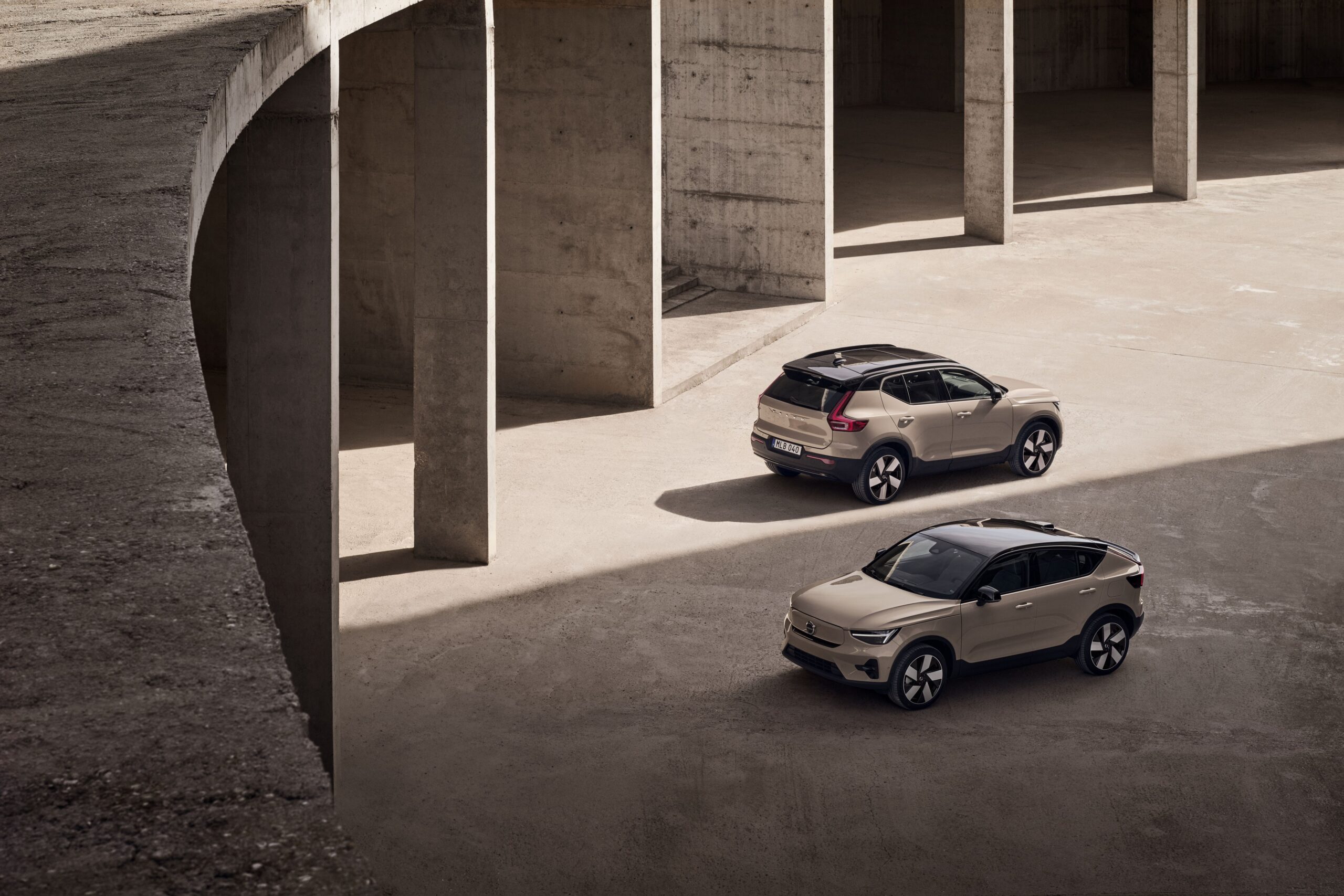
The Volvo EC40 and EX40
Share. LinkedIn Twitter Facebook Email

Related Posts

BYD enters UK eLCV market with Dolphin Cargo e-Van

May 29, 2026

Mercedes‑AMG presents all-electric GT 4‑Door Coupe

May 21, 2026

Jaguar reveals Type 01 electric four-door GT

May 21, 2026
LATEST NEWS

Maserati Nettuno engine transformed into 480kW hydrogen race unit

May 29, 2026

BYD enters UK eLCV market with Dolphin Cargo e-Van

May 29, 2026

TotalEnergies and Stellantis expand engine oil partnership

May 29, 2026

Receive breaking stories and features in your inbox each week, for free


Enter your email address:


Supplier Spotlights
  • teamtechnik
Featured Listings
  • There are currently no listings to show.
Getting in Touch
  • Contact Us
  • Media Pack
  • Meet the Editors
  • Free Weekly E-Newsletter
Our Social Channels
  • LinkedIn
Related UKi Topics
  • Automotive Interiors
  • Automotive Testing
  • Autonomous Vehicle
  • Professional Motorsport
  • Tire Technology
  • Media Pack
© 2026 UKi Media & Events a division of UKIP Media & Events Ltd
  • Terms and Conditions
  • Privacy Policy
  • Cookie Policy
  • Notice and Takedown Policy

Type above and press Enter to search. Press Esc to cancel.