

Close Menu
  • News
      • Appointments
      • EV Powertrain
      • Emissions
      • Engine Components
      • Electronics
      • Facility Developments
      • Forced Induction
      • Fuel Cell Technologies
      • Fuels & Lubricants
      • Heavy-duty & Diesel Engine Technologies
      • Hybrid Powertrain Technologies
      • Industry Forecasting
      • Legislation
      • Materials & Surface Treatment
      • Metallurgy
      • Mild-hybrid & 48V Technologies
      • New powertrain
      • Partnerships, Investments & Acquisitions
      • Quality Control
      • Prototyping
      • Sustainable fuels
      • Testing
      • Traction Control Systems
      • Transmissions Technologies
      • Webinars
  • Features
  • Online Magazines
    • April 2026
    • January 2026
    • September 2025
    • June 2025
    • March 2025
    • January 2025
    • September 2024
    • Subscribe to Automotive Powertrain Technology
    • Transmission Technology International
    • Subscribe to Transmission Technology
  • Opinion
  • Supplier Spotlight
  • Webinars
Facebook X (Twitter) Instagram
  • Automotive Interiors
  • Automotive Testing
  • Autonomous Vehicle
  • Professional Motorsport
  • Tire Technology
  • Media Pack
LinkedIn
Subscribe
Automotive Powertrain Technology International
  • News
      • Appointments
      • EV Powertrain
      • Emissions
      • Engine Components
      • Electronics
      • Facility Developments
      • Forced Induction
      • Fuel Cell Technologies
      • Fuels & Lubricants
      • Heavy-duty & Diesel Engine Technologies
      • Hybrid Powertrain Technologies
      • Industry Forecasting
      • Legislation
      • Materials & Surface Treatment
      • Metallurgy
      • Mild-hybrid & 48V Technologies
      • New powertrain
      • Partnerships, Investments & Acquisitions
      • Quality Control
      • Prototyping
      • Sustainable fuels
      • Testing
      • Traction Control Systems
      • Transmissions Technologies
      • Webinars
  • Features
  • Online Magazines
    1. April 2026
    2. January 2026
    3. September 2025
    4. June 2025
    5. March 2025
    6. January 2025
    7. September 2024
    8. Subscribe to Automotive Powertrain Technology
    9. Transmission Technology International
    10. Subscribe to Transmission Technology
    Featured

    In this Issue – April 2026

    By Web TeamMay 1, 2026
    Recent

    In this Issue – April 2026

    May 1, 2026

    In this Issue – January 2026

    December 3, 2025

    In this Issue – September 2025

    September 25, 2025
  • Opinion
  • Supplier Spotlight
  • Webinars
LinkedIn Facebook
Subscribe
Automotive Powertrain Technology International
Testing

Labcell unveils NH3 analysers for engine development and test applications

Lawrence ButcherBy Lawrence ButcherAugust 24, 20222 Mins Read
LinkedIn Twitter Facebook Email
Share
LinkedIn Twitter Facebook Email

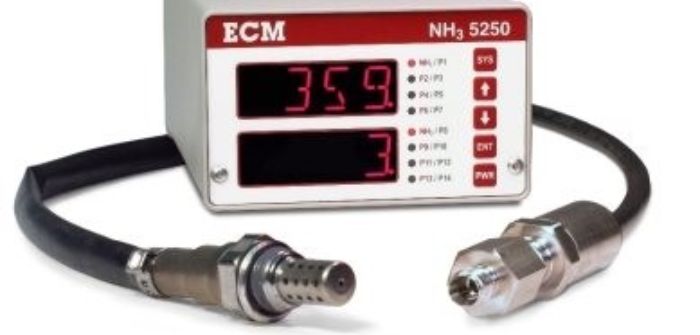
UK-based test and measurement specialist Labcell has introduced the compact ECM 5250 NH3 (ammonia) analyser for use in automotive dynamometers and in-vehicle development and testing of diesel and lean-burn engine SCR (selective catalytic reduction) systems.

The unit features a large, clear display showing measured values, and the back of the instrument includes CAN, USB and RS232 ports, plus six analog outputs. Labcell is also launching the environmentally sealed NH3CAN module for in-vehicle applications where the requirement is simply for a CAN output. These instruments can play a crucial role in projects to improve engine efficiency and/or emissions.

Both instruments utilize a solid-state ceramic sensor that is mounted in the exhaust, controlled by either the 5250 analyser or NH3CAN module. These can be connected to a dynamometer data acquisition and control system, or, for in-vehicle applications, many operators will use the CAN signal output directly with an existing software platform, data acquisition system and/or laptop computer. Indeed, the CAN output enables the instruments to be used in the loop of a real-time emissions control strategy where urea is being injected to control ammonia levels. While the 5250 analyser can operate in either single-channel or dual-channel mode, the NH3CAN module is a single-channel device.

Because the sensor in fitted in the exhaust, there is no need for sample lines or pumps, which makes installation straightforward. Furthermore, the sensor can be located up to 100m from the analyzer with no loss of response time (less than one second) or accuracy (+/-5ppm). Calibration (zero and span) can be carried out by the user, with the calibration data stored on a memory chip on the sensor’s connector. If required, a pressure compensation kit can be added to improve accuracy when operating under pressure.

Share. LinkedIn Twitter Facebook Email

Related Posts

Audi A2 e-tron racks up the miles during validation testing

May 20, 2026

Mayr Power Transmission to highlight advanced drivetrain testing solutions at Automotive Testing Expo Europe 2026

May 15, 2026

New chassis and powertrain event to launch at Vehicle Tech Week North America 2026

May 6, 2026
LATEST NEWS

Ferrari unveils all-electric Luce

May 29, 2026

Scania under-cab battery module and Megawatt Charging System available for order

May 29, 2026

Maserati Nettuno engine transformed into 480kW hydrogen race unit

May 29, 2026

Receive breaking stories and features in your inbox each week, for free


Enter your email address:


Supplier Spotlights
  • Gleason Corporation
Featured Listings
  • There are currently no listings to show.
Getting in Touch
  • Contact Us
  • Media Pack
  • Meet the Editors
  • Free Weekly E-Newsletter
Our Social Channels
  • LinkedIn
Related UKi Topics
  • Automotive Interiors
  • Automotive Testing
  • Autonomous Vehicle
  • Professional Motorsport
  • Tire Technology
  • Media Pack
© 2026 UKi Media & Events a division of UKIP Media & Events Ltd
  • Terms and Conditions
  • Privacy Policy
  • Cookie Policy
  • Notice and Takedown Policy

Type above and press Enter to search. Press Esc to cancel.