
Close Menu
  • News
      • Appointments
      • EV Powertrain
      • Emissions
      • Engine Components
      • Electronics
      • Facility Developments
      • Forced Induction
      • Fuel Cell Technologies
      • Fuels & Lubricants
      • Heavy-duty & Diesel Engine Technologies
      • Hybrid Powertrain Technologies
      • Industry Forecasting
      • Legislation
      • Materials & Surface Treatment
      • Metallurgy
      • Mild-hybrid & 48V Technologies
      • New powertrain
      • Partnerships, Investments & Acquisitions
      • Quality Control
      • Prototyping
      • Sustainable fuels
      • Testing
      • Traction Control Systems
      • Transmissions Technologies
      • Webinars
  • Features
  • Online Magazines
    • April 2026
    • January 2026
    • September 2025
    • June 2025
    • March 2025
    • January 2025
    • September 2024
    • Subscribe to Automotive Powertrain Technology
    • Transmission Technology International
    • Subscribe to Transmission Technology
  • Opinion
  • Supplier Spotlight
  • Webinars
Facebook X (Twitter) Instagram
  • Automotive Interiors
  • Automotive Testing
  • Autonomous Vehicle
  • Professional Motorsport
  • Tire Technology
  • Media Pack
LinkedIn
Subscribe
Automotive Powertrain Technology International
  • News
      • Appointments
      • EV Powertrain
      • Emissions
      • Engine Components
      • Electronics
      • Facility Developments
      • Forced Induction
      • Fuel Cell Technologies
      • Fuels & Lubricants
      • Heavy-duty & Diesel Engine Technologies
      • Hybrid Powertrain Technologies
      • Industry Forecasting
      • Legislation
      • Materials & Surface Treatment
      • Metallurgy
      • Mild-hybrid & 48V Technologies
      • New powertrain
      • Partnerships, Investments & Acquisitions
      • Quality Control
      • Prototyping
      • Sustainable fuels
      • Testing
      • Traction Control Systems
      • Transmissions Technologies
      • Webinars
  • Features
  • Online Magazines
    1. April 2026
    2. January 2026
    3. September 2025
    4. June 2025
    5. March 2025
    6. January 2025
    7. September 2024
    8. Subscribe to Automotive Powertrain Technology
    9. Transmission Technology International
    10. Subscribe to Transmission Technology
    Featured

    In this Issue – April 2026

    By Web TeamMay 1, 2026
    Recent

    In this Issue – April 2026

    May 1, 2026

    In this Issue – January 2026

    December 3, 2025

    In this Issue – September 2025

    September 25, 2025
  • Opinion
  • Supplier Spotlight
  • Webinars
LinkedIn Facebook
Subscribe
Automotive Powertrain Technology International
Engine Components

Eaton unveils electronic fuel tank venting system

Dean SlavnichBy Dean SlavnichApril 6, 20172 Mins Read
LinkedIn Twitter Facebook Email
Share
LinkedIn Twitter Facebook Email

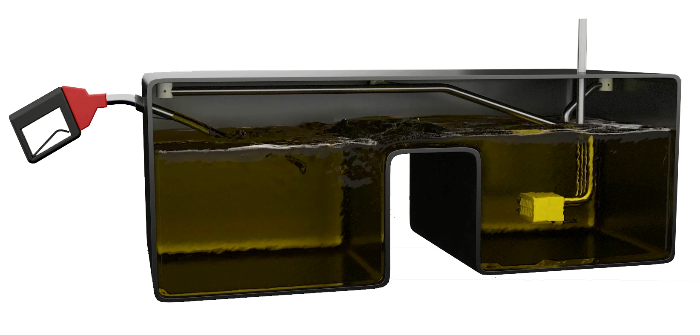
Eaton has announced a new electronically controlled fuel tank vapour venting system – eVaptive – that it states can be ‘optimised for any vehicle platform, eliminating the need for car manufacturers to design unique venting systems for different vehicles’.

The eVaptive system uses software to control the transmission of fuel vapours to a charcoa canister while keeping liquid fuel confined to the fuel tank. For any given fuel tank application, the system can be optimised for all driving situations as well as stationary and refueling modes. The hardware is a “one-size- fits-all” unit that can be programmed to fit any vehicle platform.

“This new technology is an example of the advanced engineering capabilities of Eaton as we look to provide customers with solutions that not only provide a single packaging option but also the flexibility to customise the system based on the specific vehicle design,” said Deborah Kullman, vice president, general manager, Chassis Driveline Controls, Eaton Vehicle Group. “As the industry moves from traditional mechanical to electronic solutions, Eaton is leading the way with technologies such as eVaptive.”

In a conventional fuel tank design, optimal vapour venting positions are determined at the top of the tank where vapours accumulate. Once determined, Eaton’s eVaptive system vent points can then be opened and closed as needed for optimised venting via an actuator system. Any liquid fuel that enters the vent tubes is routed to a central liquid trap where it is drained back into the fuel tank. Once the vapour and the errant fuel are separated in the liquid trap, the vapour is routed to the charcoal canister for adsorption.

The actuator system is controlled by a computer algorithm that minimises fuel carryover to the interior liquid trap in all situations and controls the fuel level during refueling. It also can be used to mitigate the spillover that sometimes occurs when filling a tank to the top.

Eaton states that the eVaptive system is currently undergoing testing with a global vehicle manufacturer.

Share. LinkedIn Twitter Facebook Email

Related Posts

TotalEnergies and Stellantis expand engine oil partnership

May 29, 2026

BorgWarner wins turbocharger contracts with two European OEMs

May 7, 2026

BorgWarner secures long-term supply agreement with off-highway OEM

April 23, 2026
LATEST NEWS

Ferrari unveils all-electric Luce

May 29, 2026

Scania under-cab battery module and Megawatt Charging System available for order

May 29, 2026

Maserati Nettuno engine transformed into 480kW hydrogen race unit

May 29, 2026

Receive breaking stories and features in your inbox each week, for free


Enter your email address:


Supplier Spotlights
  • IAG-ng
Featured Listings
  • There are currently no listings to show.
Getting in Touch
  • Contact Us
  • Media Pack
  • Meet the Editors
  • Free Weekly E-Newsletter
Our Social Channels
  • LinkedIn
Related UKi Topics
  • Automotive Interiors
  • Automotive Testing
  • Autonomous Vehicle
  • Professional Motorsport
  • Tire Technology
  • Media Pack
© 2026 UKi Media & Events a division of UKIP Media & Events Ltd
  • Terms and Conditions
  • Privacy Policy
  • Cookie Policy
  • Notice and Takedown Policy

Type above and press Enter to search. Press Esc to cancel.