

* Sponsored content
Dumarey’s presence at SIAT 2026, alongside Horiba India, served as an opportunity to reaffirm the company’s long-term approach to decarbonization and showcase the breadth of its propulsion engineering expertise. The event, held from January 28 to 30 in Pune (India), provided visibility not only to Dumarey’s advances in hydrogen technologies but also to its commitment to multifuel optimized combustion systems, engineering services and pragmatic solutions for diverse mobility markets.
From an ecosystem perspective, the joint participation at SIAT with Horiba India underscored a shared commitment to supporting India’s clean mobility objectives. Horiba’s locally developed Electrolyzer Test Station and hydrogen-ready labs matched Dumarey’s hardware and software portfolio, enabling a bridge between national policy goals and deployable industrial solutions.
By combining hydrogen innovation, optimized combustion technologies for low-carbon fuels and end-to-end engineering services, Dumarey positioned itself as a reliable partner for India and Asia’s multispeed transition toward sustainable and economically viable mobility.
Rather than focusing the narrative on a single technology pathway, at SIAT Dumarey highlighted a dual-path transition strategy. Through the integration of hydrogen development programs, advanced combustion technologies and comprehensive engineering services, the company demonstrated its ability to support OEMs facing different regulatory frameworks, cost constraints and fleet modernization timelines. The collaboration with Horiba India – spanning testing, simulation, validation and hydrogen-ready infrastructure – reinforced Dumarey’s positioning as a systems partner capable of guiding complete development cycles.
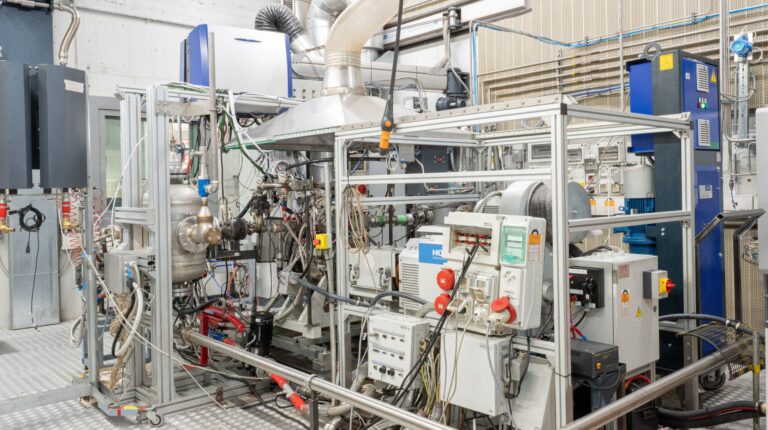
Among the technologies presented, the hydrogen portfolio remained a key point of interest. The Hydrogen V8 6.6L, with over 6,000 testing hours and validated control software, showcased readiness for commercial deployment and cost-efficient adoption through reuse of existing engine architectures.
Dumarey’s role as a full-cycle engineering partner is further reinforced by its comprehensive engineering services offering. Extending far beyond traditional development support, these services cover the entire value chain – from early concept ideation to turnkey delivery – enabling OEMs to accelerate innovation while providing technical robustness, production feasibility and long-term sustainability.
The engineering portfolio spans all engine sizes, ranging from compact and medium-duty platforms to large-bore industrial and marine engines, supporting both high-volume automotive applications and low-volume, high-power specialized systems. Dumarey’s multidisciplinary expertise embraces the full spectrum of conventional fuels (diesel, gasoline, natural gas, dual fuel) as well as next-generation alternative fuels essential for decarbonization pathways, including hydrogen, ammonia, methanol, e-fuels, biofuels and blended low-carbon energy carriers.
The development process is structured across a complete lifecycle: concept development, advanced design, virtual validation, system simulation, prototyping, testing, calibration and industrialization support. This approach offers seamless integration between mechanical, electronic and software domains, while guaranteeing compliance with the most stringent global emissions and safety regulations.
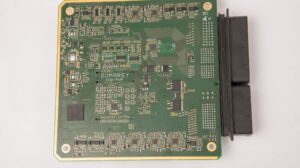
Dumarey’s hardware engineering capabilities – covering combustion and aftertreatment design, hydrogen component development, fuel injection and air management systems, power electronics, thermal management and full powertrain level integration – align closely with the company’s long-term technology roadmap. In addition, Dumarey provides complete turnkey solutions, including manufacturing readiness, system integration at vehicle or equipment level, digital controls development and validation programs tailored to specific markets.
By offering this fully integrated engineering ecosystem, OEMs can reduce their time-to-market, derisk technology transitions and accelerate the deployment of high-efficiency propulsion systems.