

Close Menu
  • News
      • Appointments
      • EV Powertrain
      • Emissions
      • Engine Components
      • Electronics
      • Facility Developments
      • Forced Induction
      • Fuel Cell Technologies
      • Fuels & Lubricants
      • Heavy-duty & Diesel Engine Technologies
      • Hybrid Powertrain Technologies
      • Industry Forecasting
      • Legislation
      • Materials & Surface Treatment
      • Metallurgy
      • Mild-hybrid & 48V Technologies
      • New powertrain
      • Partnerships, Investments & Acquisitions
      • Quality Control
      • Prototyping
      • Sustainable fuels
      • Testing
      • Traction Control Systems
      • Transmissions Technologies
      • Webinars
  • Features
  • Online Magazines
    • April 2026
    • January 2026
    • September 2025
    • June 2025
    • March 2025
    • January 2025
    • September 2024
    • Subscribe to Automotive Powertrain Technology
    • Transmission Technology International
    • Subscribe to Transmission Technology
  • Opinion
  • Supplier Spotlight
  • Webinars
Facebook X (Twitter) Instagram
  • Automotive Interiors
  • Automotive Testing
  • Autonomous Vehicle
  • Professional Motorsport
  • Tire Technology
  • Media Pack
LinkedIn
Subscribe
Automotive Powertrain Technology International
  • News
      • Appointments
      • EV Powertrain
      • Emissions
      • Engine Components
      • Electronics
      • Facility Developments
      • Forced Induction
      • Fuel Cell Technologies
      • Fuels & Lubricants
      • Heavy-duty & Diesel Engine Technologies
      • Hybrid Powertrain Technologies
      • Industry Forecasting
      • Legislation
      • Materials & Surface Treatment
      • Metallurgy
      • Mild-hybrid & 48V Technologies
      • New powertrain
      • Partnerships, Investments & Acquisitions
      • Quality Control
      • Prototyping
      • Sustainable fuels
      • Testing
      • Traction Control Systems
      • Transmissions Technologies
      • Webinars
  • Features
  • Online Magazines
    1. April 2026
    2. January 2026
    3. September 2025
    4. June 2025
    5. March 2025
    6. January 2025
    7. September 2024
    8. Subscribe to Automotive Powertrain Technology
    9. Transmission Technology International
    10. Subscribe to Transmission Technology
    Featured

    In this Issue – April 2026

    By Web TeamMay 1, 2026
    Recent

    In this Issue – April 2026

    May 1, 2026

    In this Issue – January 2026

    December 3, 2025

    In this Issue – September 2025

    September 25, 2025
  • Opinion
  • Supplier Spotlight
  • Webinars
LinkedIn Facebook
Subscribe
Automotive Powertrain Technology International
Electric Powertrain Technologies

Mahle and Allotrope develop fast-charge lithium-carbon battery system

Lawrence ButcherBy Lawrence ButcherSeptember 24, 20213 Mins Read
LinkedIn Twitter Facebook Email
Share
LinkedIn Twitter Facebook Email

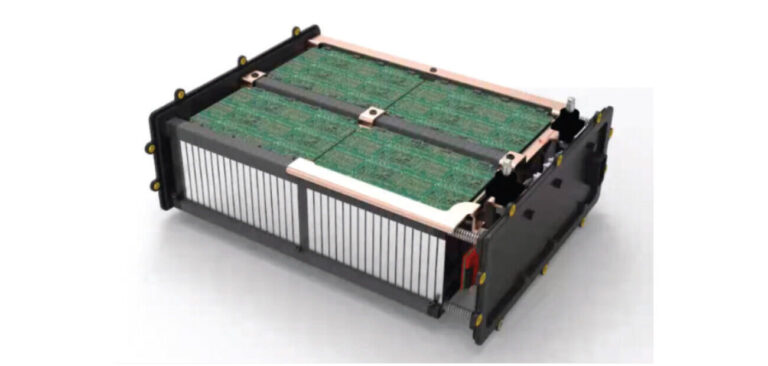
A new battery technology has been unveiled by Mahle Powertrain and Allotrope Energy which is said to offer ultra-fast recharging, coupled with good power density. By combining the benefits of super capacitors and traditional lithium-ion batteries, the lithium-carbon technology should enable a full charge to be delivered in a similar time to refueling an internal combustion-powered vehicle. In addition, Li-C cells are free from rare-earth metals, are fully recyclable, and are not susceptible to runaway events.

“Range anxiety is often quoted as the main barrier to electric vehicle adoption, but if the battery could be recharged in the same time it takes to refuel a conventional IC engine vehicle, much of that worry goes away,” said Dr Mike Bassett, Mahle Powertrain’s head of research.

“With the rise of the on-demand economy, there’s been a rapid increase in the use of petrol-powered mopeds for urban deliveries such as take-away meals, and this has contributed to air quality issues in our cities,” said Bassett. “Decarbonizing these deliveries has so far proved difficult without maintaining a stock of expensive interchangeable batteries or switching to a larger, heavier electric vehicle with increased energy consumption.”

However, in a collaborative project with Allotrope Energy, Mahle Powertrain looked at how an electric moped could be used as an urban delivery vehicle powered by an inexpensive small capacity lithium-carbon battery. The study centered around a city-based e-moped fast-food delivery service with a 25km target range. A 500Wh conventional lithium-ion battery would require a recharge mid-shift that, even with a fast-charger, would take more than 30 minutes. In addition, regular fast-charging reduces battery life to the point it would likely need replacing every year or two. A lithium-carbon pack, however, could be recharged at 20kW in just 90 seconds, meaning a full charge could be achieved in the time taken for the next delivery to be collected.

Allotrope Energy’s lithium-carbon technology features a high-rate battery-type anode and a high-capacity electric double layer capacitor-style (EDLC) cathode, separated by an organic electrolyte. The result is a battery cell that apparently suffers none of the thermal degradation effects experienced by traditional lithium-based batteries. Its stability, even at high temperatures, permits high current delivery and fast recharging, all without the need for complex external cooling or elaborate battery management systems.

Additionally, its capacitor-style cathode enables a lifetime of over 100,000 cycles, far greater than conventional batteries, while the elimination of rare-earth metals and the design’s complete recyclability make it better for the environment both during production and long after it.

“With ultra-fast charging, the size of the battery can be optimized to suit the scenarios the vehicle will be used in, and that leads not only to weight savings but also cost reductions that further lower the barriers to decarbonization,” Bassett said. “The real challenge came in designing the electrical architecture capable of absorbing such high rates of charge. Additionally, with no suitable charging systems on the market that can deliver these charge rates from a domestic supply, we created our own bespoke design.”

The solution Bassett’s team came up with uses its own built-in capacitor-based energy store to deliver ultra-fast charging up to 20kW by augmenting the power from a typical 7kW single phase connection, thereby reducing cost and complexity while eliminating the need for expensive power grid connection upgrades.

Share. LinkedIn Twitter Facebook Email

Related Posts

Ferrari unveils all-electric Luce

May 29, 2026

Maserati Nettuno engine transformed into 480kW hydrogen race unit

May 29, 2026

BYD enters UK eLCV market with Dolphin Cargo e-Van

May 29, 2026
LATEST NEWS

Ferrari unveils all-electric Luce

May 29, 2026

Scania under-cab battery module and Megawatt Charging System available for order

May 29, 2026

Maserati Nettuno engine transformed into 480kW hydrogen race unit

May 29, 2026

Receive breaking stories and features in your inbox each week, for free


Enter your email address:


Supplier Spotlights
  • EcoNovaTech
Featured Listings
  • There are currently no listings to show.
Getting in Touch
  • Contact Us
  • Media Pack
  • Meet the Editors
  • Free Weekly E-Newsletter
Our Social Channels
  • LinkedIn
Related UKi Topics
  • Automotive Interiors
  • Automotive Testing
  • Autonomous Vehicle
  • Professional Motorsport
  • Tire Technology
  • Media Pack
© 2026 UKi Media & Events a division of UKIP Media & Events Ltd
  • Terms and Conditions
  • Privacy Policy
  • Cookie Policy
  • Notice and Takedown Policy

Type above and press Enter to search. Press Esc to cancel.