

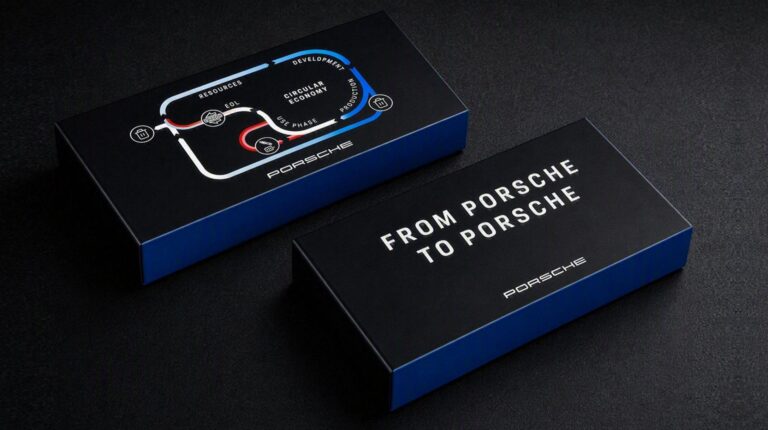
Porsche is working to recover valuable raw materials for reuse in new batteries through a collaboration focused on high-voltage battery recycling. As part of the pilot project, battery cathode active material has been produced for the first time using 100% recycled raw materials, including lithium, nickel, cobalt and manganese.
Together with partners such as the recycling specialist Cylib, Porsche has replaced primary raw materials with fully recycled cathode materials. The company exclusively uses battery raw materials recovered from its own high-voltage batteries. The battery cells manufactured within the pilot project are currently undergoing extensive operational testing.
“With battery cells made entirely from recycled raw materials such as lithium and cobalt, we have achieved an important technological milestone,” said Joachim Scharnagl, member of the executive board for procurement at Porsche. “This innovation is a key step in advancing both circular economy principles and raw material resilience, always with the ambition of optimizing progress, quality and resource efficiency.”
This achievement continues the pilot project on high-voltage battery recycling launched last year. Within the project, Porsche and its partners recover valuable raw materials from end-of-life high-voltage batteries, process them into new materials, and use them in new battery cells for Porsche test vehicles.
Following the recovery and processing stages, the project has now entered its next phase, with recycled active materials fully replacing primary raw materials for the first time. The recycled cathode active materials contain lithium, nickel, cobalt and manganese.
“Cylib closes the battery recycling loop, from end-of-life batteries to recovered raw materials,” explained Dr Lilian Schwich, co-CEO and co-founder of Cylib. “The pilot project with Porsche and additional partners demonstrates that our approach is feasible in practice: valuable raw materials from Porsche batteries at the end of their first life can potentially flow back into new high-performance batteries for Porsche vehicles.”
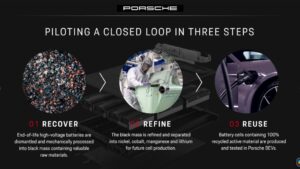
Beyond raw material recovery, Porsche is assessing the quality of the recycled materials. The next step is to determine whether they meet the required standards for use in batteries, including value, quality and performance. Initial tests have indicated the technical feasibility of the approach, with further results expected in the second half of 2026. The findings from the pilot project could inform the future use of these materials in series-production battery cells.
The findings from the pilot project are already being incorporated into Porsche’s battery disposal process. Through its partnership with Cylib, Porsche is recycling end-of-life high-voltage batteries collected from Porsche Centers across Germany. Since May 2026, the batteries have been processed using a water-based recycling process.
The recovered raw materials are tracked through a dedicated material account and are expected to be available to Porsche and selected partner companies for battery cell production from 2028. The approach is intended to reduce reliance on global raw material sources, with recycled materials recovered in Europe potentially being used in high-voltage batteries for future Porsche vehicles.
In related news, Aviloo launches independent study into used EV battery health