Close Menu
  • News
      • Appointments
      • EV Powertrain
      • Emissions
      • Engine Components
      • Electronics
      • Facility Developments
      • Forced Induction
      • Fuel Cell Technologies
      • Fuels & Lubricants
      • Heavy-duty & Diesel Engine Technologies
      • Hybrid Powertrain Technologies
      • Industry Forecasting
      • Legislation
      • Materials & Surface Treatment
      • Metallurgy
      • Mild-hybrid & 48V Technologies
      • New powertrain
      • Partnerships, Investments & Acquisitions
      • Quality Control
      • Prototyping
      • Sustainable fuels
      • Testing
      • Traction Control Systems
      • Transmissions Technologies
      • Webinars
  • Features
  • Online Magazines
    • April 2026
    • January 2026
    • September 2025
    • June 2025
    • March 2025
    • January 2025
    • September 2024
    • Subscribe to Automotive Powertrain Technology
    • Transmission Technology International
    • Subscribe to Transmission Technology
  • Opinion
  • Supplier Spotlight
  • Webinars
Facebook X (Twitter) Instagram
  • Automotive Interiors
  • Automotive Testing
  • Autonomous Vehicle
  • Professional Motorsport
  • Tire Technology
  • Media Pack
LinkedIn
Subscribe
Automotive Powertrain Technology International
  • News
      • Appointments
      • EV Powertrain
      • Emissions
      • Engine Components
      • Electronics
      • Facility Developments
      • Forced Induction
      • Fuel Cell Technologies
      • Fuels & Lubricants
      • Heavy-duty & Diesel Engine Technologies
      • Hybrid Powertrain Technologies
      • Industry Forecasting
      • Legislation
      • Materials & Surface Treatment
      • Metallurgy
      • Mild-hybrid & 48V Technologies
      • New powertrain
      • Partnerships, Investments & Acquisitions
      • Quality Control
      • Prototyping
      • Sustainable fuels
      • Testing
      • Traction Control Systems
      • Transmissions Technologies
      • Webinars
  • Features
  • Online Magazines
    1. April 2026
    2. January 2026
    3. September 2025
    4. June 2025
    5. March 2025
    6. January 2025
    7. September 2024
    8. Subscribe to Automotive Powertrain Technology
    9. Transmission Technology International
    10. Subscribe to Transmission Technology
    Featured

    In this Issue – April 2026

    By Web TeamMay 1, 2026
    Recent

    In this Issue – April 2026

    May 1, 2026

    In this Issue – January 2026

    December 3, 2025

    In this Issue – September 2025

    September 25, 2025
  • Opinion
  • Supplier Spotlight
  • Webinars
LinkedIn Facebook
Subscribe
Automotive Powertrain Technology International
Features

The 2-liter four-cylinder Audi engine that majors in high-efficiency

Sam PettersBy Sam PettersMarch 21, 20192 Mins Read
LinkedIn Twitter Facebook Email
Share
LinkedIn Twitter Facebook Email

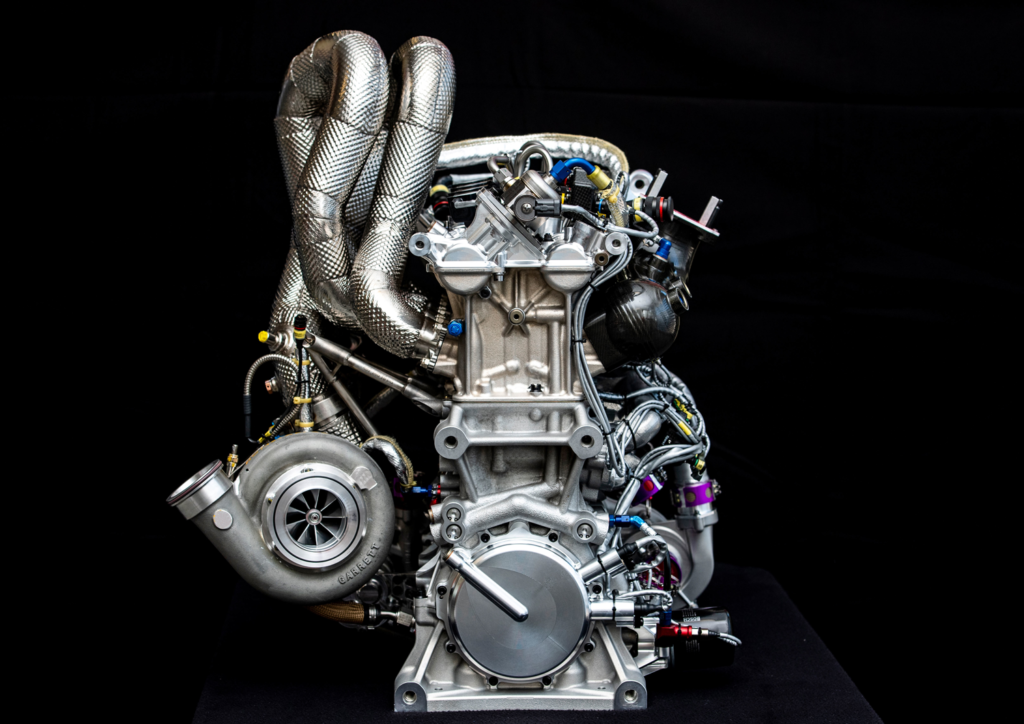
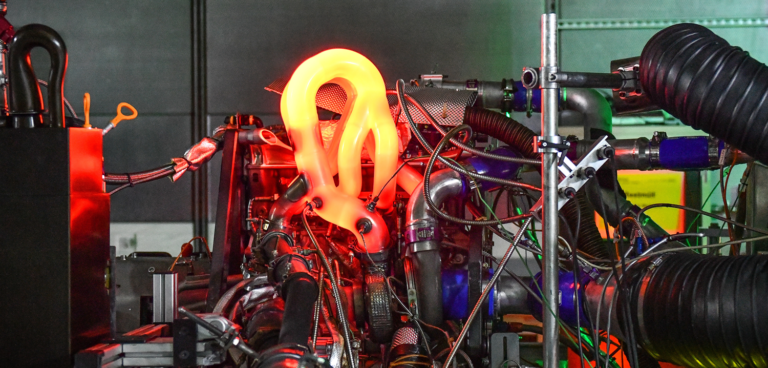
Following two and a half years of development and some 1,000 hours of dynamometer testing, Audi Motorsport has developed an 618ps powerplant that highlights the potential of engine downsizing. The 2-liter four-cylinder can also generate a short-term 30ps power boost.

Head of Audi Motorsport Dieter Gass said, “[DTM’s] move from the naturally aspirated V8 to the turbo engine is not only important due to the additional output of some 100ps. In the DTM, we’re now driving with a high-efficiency engine of the type we’re also using in many production vehicles of the Group.”

The new Class 1 Regulations of the DTM are geared to efficiency. As in production, the development challenge was to extract the maximum from the available fuel through high compression and high efficiency.

Audi’s compact four-cylinder turbo engine with gasoline direct injection only weighs 85kg. The unit also uses standard RON 98 fuel, which aids technology transfer from motorsport to production. In addition, the engine is capable of running on e-fuels.

Each of the roughly 2,000 components of the DTM engine was designed from scratch, and the compact inline four-cylinder front engine is longitudinally mounted in the Audi RS 5 DTM.

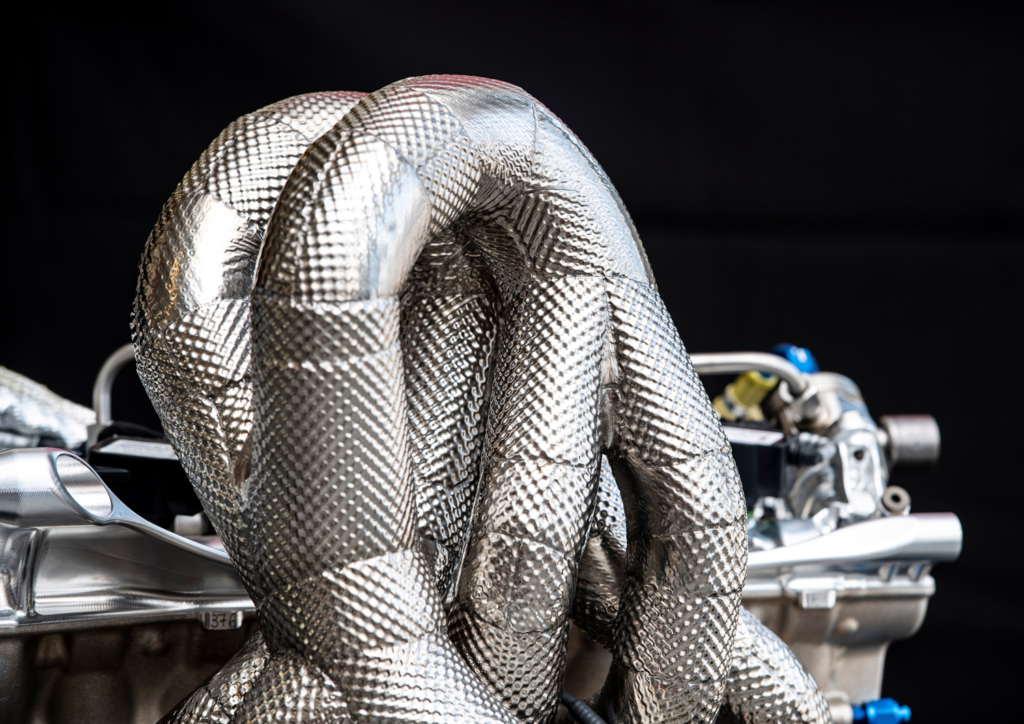
The turbocharger that operates with a maximum absolute pressure of 3.5 bar sits on the right-hand side of the car and is kept spinning by means of an anti-lag system even when the driver’s foot is not on the accelerator pedal. The powerplant’s manifolds loom high in the engine bay. Gears are shifted at 9,500rpm.
Share. LinkedIn Twitter Facebook Email

Related Posts

Study reveals what EV buyers really ask about batteries

November 12, 2025

New self-assembling material could be the key to recyclable EV batteries

September 4, 2025

Hyundai/GM alliance powers forward with five all-new vehicles

August 12, 2025
LATEST NEWS

Renault introduces LPG bi-fuel Clio that delivers up to 1,450km range

May 7, 2026

UK consortium secures funding for ReCAM lithium-ion battery recycling project

May 7, 2026

BorgWarner wins turbocharger contracts with two European OEMs

May 7, 2026

Receive breaking stories and features in your inbox each week, for free


Enter your email address:


Supplier Spotlights
  • GFM GmbH
Featured Listings
  • There are currently no listings to show.
Getting in Touch
  • Contact Us
  • Media Pack
  • Meet the Editors
  • Free Weekly E-Newsletter
Our Social Channels
  • LinkedIn
Related UKi Topics
  • Automotive Interiors
  • Automotive Testing
  • Autonomous Vehicle
  • Professional Motorsport
  • Tire Technology
  • Media Pack
© 2026 UKi Media & Events a division of UKIP Media & Events Ltd
  • Terms and Conditions
  • Privacy Policy
  • Cookie Policy
  • Notice and Takedown Policy

Type above and press Enter to search. Press Esc to cancel.