
Close Menu
  • News
      • Appointments
      • EV Powertrain
      • Emissions
      • Engine Components
      • Electronics
      • Facility Developments
      • Forced Induction
      • Fuel Cell Technologies
      • Fuels & Lubricants
      • Heavy-duty & Diesel Engine Technologies
      • Hybrid Powertrain Technologies
      • Industry Forecasting
      • Legislation
      • Materials & Surface Treatment
      • Metallurgy
      • Mild-hybrid & 48V Technologies
      • New powertrain
      • Partnerships, Investments & Acquisitions
      • Quality Control
      • Prototyping
      • Sustainable fuels
      • Testing
      • Traction Control Systems
      • Transmissions Technologies
      • Webinars
  • Features
  • Online Magazines
    • April 2026
    • January 2026
    • September 2025
    • June 2025
    • March 2025
    • January 2025
    • September 2024
    • Subscribe to Automotive Powertrain Technology
    • Transmission Technology International
    • Subscribe to Transmission Technology
  • Opinion
  • Supplier Spotlight
  • Webinars
Facebook X (Twitter) Instagram
  • Automotive Interiors
  • Automotive Testing
  • Autonomous Vehicle
  • Professional Motorsport
  • Tire Technology
  • Media Pack
LinkedIn
Subscribe
Automotive Powertrain Technology International
  • News
      • Appointments
      • EV Powertrain
      • Emissions
      • Engine Components
      • Electronics
      • Facility Developments
      • Forced Induction
      • Fuel Cell Technologies
      • Fuels & Lubricants
      • Heavy-duty & Diesel Engine Technologies
      • Hybrid Powertrain Technologies
      • Industry Forecasting
      • Legislation
      • Materials & Surface Treatment
      • Metallurgy
      • Mild-hybrid & 48V Technologies
      • New powertrain
      • Partnerships, Investments & Acquisitions
      • Quality Control
      • Prototyping
      • Sustainable fuels
      • Testing
      • Traction Control Systems
      • Transmissions Technologies
      • Webinars
  • Features
  • Online Magazines
    1. April 2026
    2. January 2026
    3. September 2025
    4. June 2025
    5. March 2025
    6. January 2025
    7. September 2024
    8. Subscribe to Automotive Powertrain Technology
    9. Transmission Technology International
    10. Subscribe to Transmission Technology
    Featured

    In this Issue – April 2026

    By Web TeamMay 1, 2026
    Recent

    In this Issue – April 2026

    May 1, 2026

    In this Issue – January 2026

    December 3, 2025

    In this Issue – September 2025

    September 25, 2025
  • Opinion
  • Supplier Spotlight
  • Webinars
LinkedIn Facebook
Subscribe
Automotive Powertrain Technology International
Features

Aston Martin reveals development details for its new V12

Sam PettersBy Sam PettersDecember 17, 20183 Mins Read
LinkedIn Twitter Facebook Email
Aston Martin reveals development details for its new V12
Share
LinkedIn Twitter Facebook Email

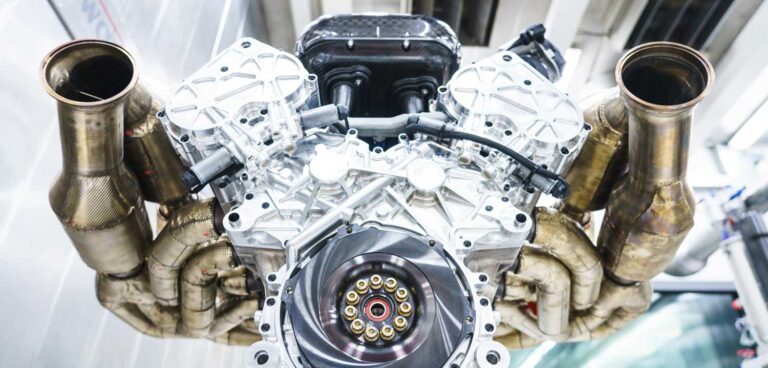
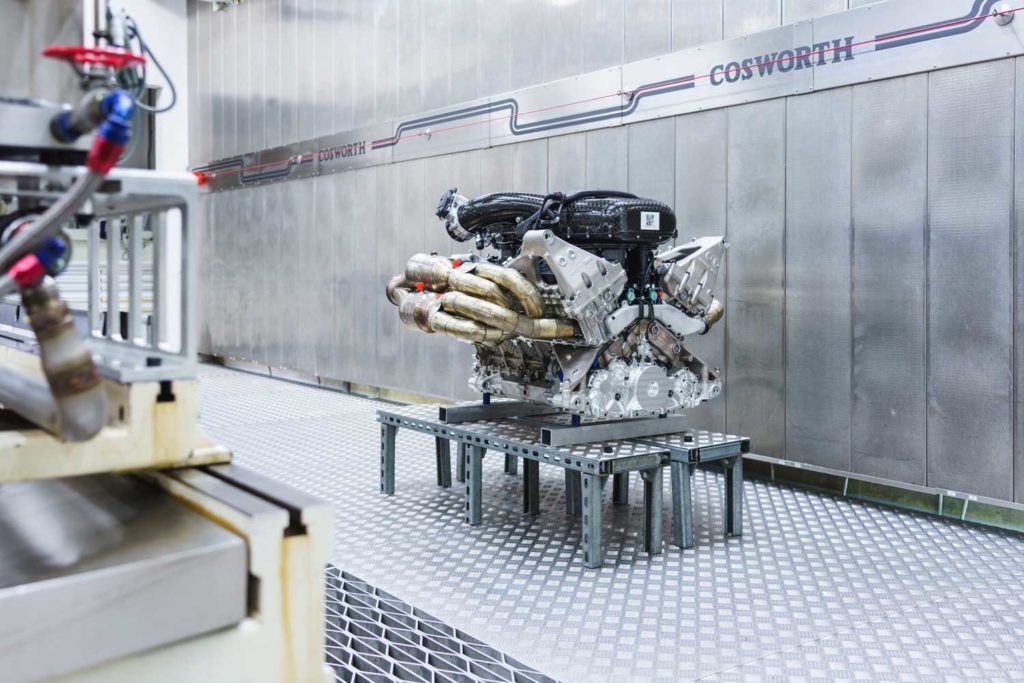
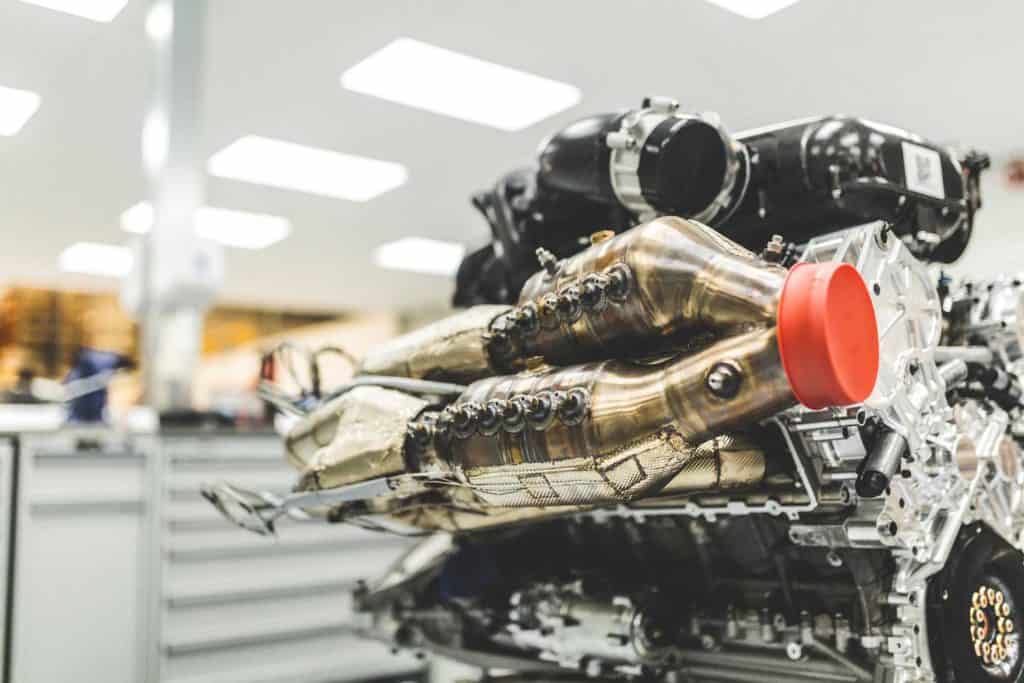
Developed in conjunction with longtime technical partner Cosworth, the new naturally aspirated V12 was designed to represent the ultimate expression of the internal combustion engine.

The resulting engine displaces 6.5 liters, and the 65° V12 sets exceptional new standards for maximum RPM and specific output with certified peak power of 1015ps (155ps/liter) at 10,500rpm, continuing to a maximum RPM of 11,100. Peak torque is 740Nm at 7,000rpm.

With these peak outputs delivered purely by the ICE, the Valkyrie’s performance figures will be further boosted by a battery hybrid system, details of which will be revealed later in the development program.

Cosworth’s F1 expertise is also evidenced in the Aston Martin Valkyrie engine’s weight. Given that the engine is a fully stressed element of the car and the level of technology in the combustion system, keeping weight down was a challenge for the company. Especially as use of extreme materiel alloys – which are so new that material properties over time are unproven – were actively avoided.

Aside from the major castings – block, cylinder heads, sump and structural cam covers – the majority of the engine’s internal components are machined from solid material. These include titanium conrods and F1-spec pistons. Not only does this allow the use of material with ideal properties, but the ultra-fine machining process means greater consistency and components optimized for minimum mass and maximum strength.

The result is an engine that weighs just 206kg. This comparatively low weight is due, in part, to component optimization. An example of this is the Valkyrie’s crankshaft, which is 50% lighter than the one used in the Aston Martin One-77’s V12.

The manufacturing process for the billet-machined crankshaft takes six months. Starting life as a solid steel bar 170mm in diameter and 775mm long, it is first roughed out, then heat treated, finish machined, heat treated again, gear ground, final ground and super-finished. Upon completion, 80% of the original bar has been machined away.

Bruce Wood, managing director at Cosworth, said, “Being asked to create a naturally aspirated V12 engine fit for what will surely be one of the most iconic cars of all time is an immense source of pride for Cosworth.
“Decades in F1 taught us to expect a pretty demanding specification from someone with Adrian Newey’s unsurpassed track record, but when we started talking about specifics of power, weight, emissions compliance and durability combined with ever harder and sometimes conflicting targets, we knew this would be a challenge like no other.

“It’s been a fantastic partnership between Aston Martin, Red Bull and Cosworth, with each party bringing a distinct clarity of vision that has proved essential in delivering an internal combustion engine way beyond anything previously seen in a road car application.”

Aston Martin Lagonda president and group CEO, Andy Palmer, added: “To anyone with a drop of [gasoline] in their blood, a high-revving naturally aspirated V12 is the absolute pinnacle. Nothing sounds better or encapsulates the emotion and excitement of the internal combustion engine more completely.

“Despite the apparently insurmountable challenges it presented, there was never any question that the Aston Martin Valkyrie would make do with anything less. From the outset the team at Cosworth were unflinching in their commitment to achieving benchmarks that pushed the boundaries of the possible. The result is a quite extraordinary engine – one that I doubt will ever be surpassed.”
Aston Martin reveals development details for its new V12

Share. LinkedIn Twitter Facebook Email

Related Posts

Study reveals what EV buyers really ask about batteries

November 12, 2025

New self-assembling material could be the key to recyclable EV batteries

September 4, 2025

Hyundai/GM alliance powers forward with five all-new vehicles

August 12, 2025
LATEST NEWS

Renault introduces LPG bi-fuel Clio that delivers up to 1,450km range

May 7, 2026

UK consortium secures funding for ReCAM lithium-ion battery recycling project

May 7, 2026

BorgWarner wins turbocharger contracts with two European OEMs

May 7, 2026

Receive breaking stories and features in your inbox each week, for free


Enter your email address:


Supplier Spotlights
  • Associated Spring
Featured Listings
  • There are currently no listings to show.
Getting in Touch
  • Contact Us
  • Media Pack
  • Meet the Editors
  • Free Weekly E-Newsletter
Our Social Channels
  • LinkedIn
Related UKi Topics
  • Automotive Interiors
  • Automotive Testing
  • Autonomous Vehicle
  • Professional Motorsport
  • Tire Technology
  • Media Pack
© 2026 UKi Media & Events a division of UKIP Media & Events Ltd
  • Terms and Conditions
  • Privacy Policy
  • Cookie Policy
  • Notice and Takedown Policy

Type above and press Enter to search. Press Esc to cancel.