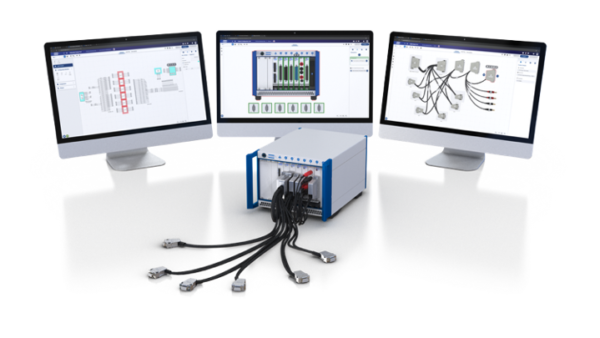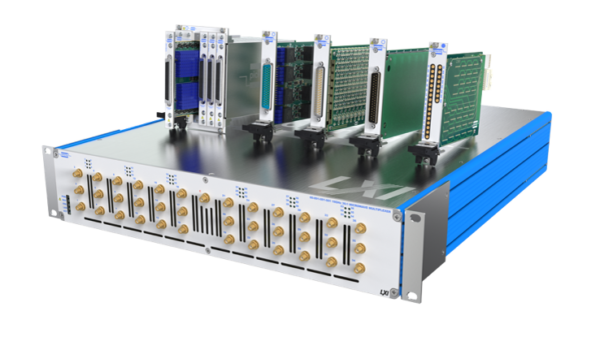

Pickering Interfaces provides modular signal switching and sensor simulation solutions for automotive powertrain test and validation, with platforms based on open architectures including PXI, LXI and USB. Our technologies support hardware-in-the-loop (HIL) testing, ECU validation and automated test systems for both internal combustion engine and electric vehicle powertrains.
Core test and verification capabilities include:
- Fault insertion units: Used to automate safety-critical software validation by simulating open circuits, short-to-ground, short-to-battery and pin-to-pin faults across a range of current-handling requirements, including automotive Ethernet fault testing.
- Battery simulation and BMS testing: Multi-channel simulator modules emulate lithium-ion cell behavior with high-voltage isolation and independent current sourcing and sinking for charge and discharge cycle testing.
- Sensor simulation: Modules replicate engine, motor and thermal inputs for ECUs, including resolver simulation for EV motor controllers, RTDs, thermistors and thermocouples.
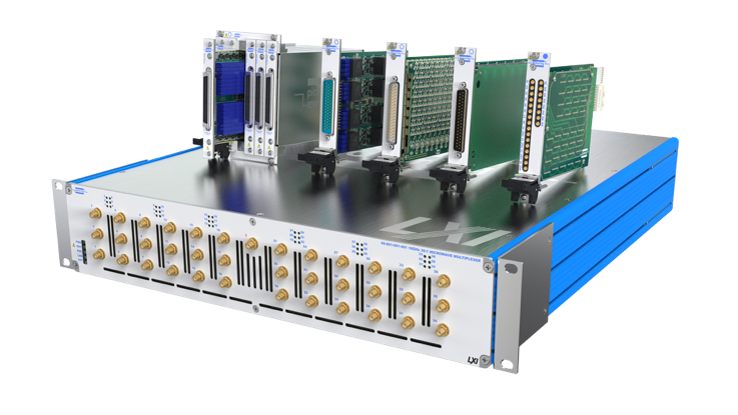
- Programmable resistors and signal switching matrices: Used to replicate sensor behavior, variable loads and dynamically route signals between real powertrain hardware, simulated loads and diagnostic measurement equipment.
Design, integration and infrastructure support includes:
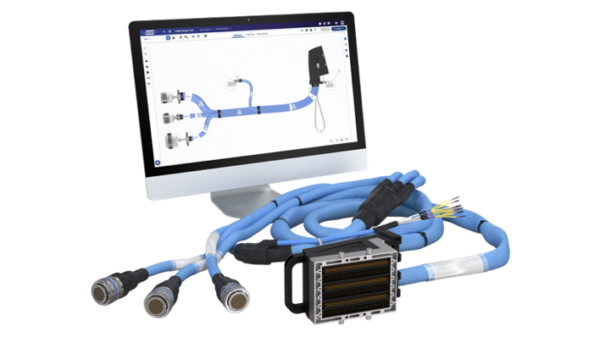
- Custom cabling and connectivity: Cable harnesses, connector assemblies and breakout boxes configured for automotive control units.
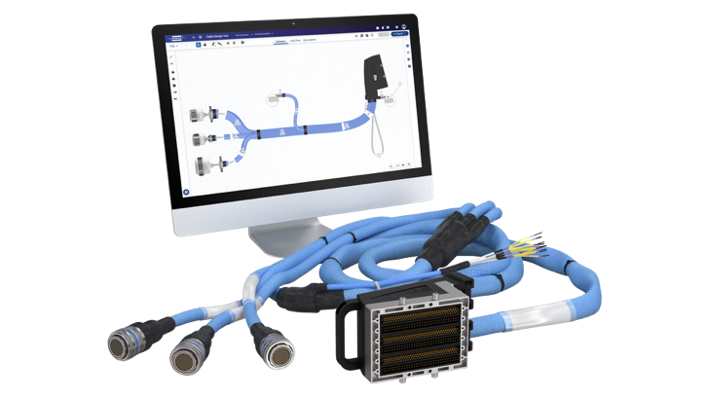
- Test System Architect: An online tool that helps engineers visualize, document and route complex powertrain signal paths.
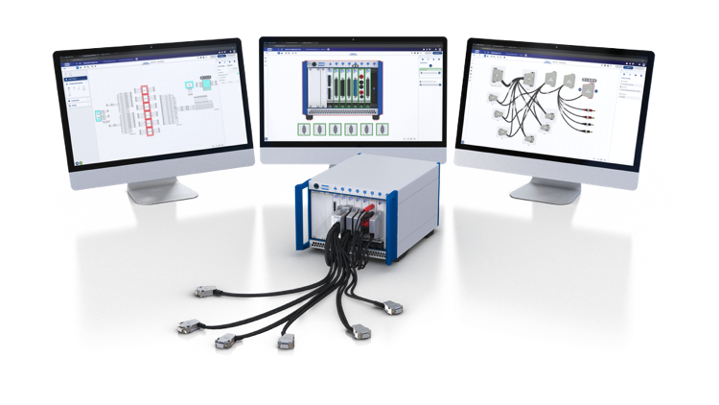
- Software-agnostic platforms: Hardware designed to integrate with commonly used engineering environments such as MATLAB, Simulink, LabVIEW and Python.
- Diagnostic tools: Software and switching-system test tools that help identify relay faults
Pickering’s value lies in combining product breadth with long-term test system support. With a wide range of modular switching, simulation, instrumentation and connectivity solutions, plus graphical software tools for signal-path design and system configuration, the company helps automotive test engineers improve reliability, reduce integration effort and maintain flexible test platforms as powertrain technologies continue to evolve.