

Close Menu
  • News
      • Appointments
      • EV Powertrain
      • Emissions
      • Engine Components
      • Electronics
      • Facility Developments
      • Forced Induction
      • Fuel Cell Technologies
      • Fuels & Lubricants
      • Heavy-duty & Diesel Engine Technologies
      • Hybrid Powertrain Technologies
      • Industry Forecasting
      • Legislation
      • Materials & Surface Treatment
      • Metallurgy
      • Mild-hybrid & 48V Technologies
      • New powertrain
      • Partnerships, Investments & Acquisitions
      • Quality Control
      • Prototyping
      • Sustainable fuels
      • Testing
      • Traction Control Systems
      • Transmissions Technologies
      • Webinars
  • Features
  • Online Magazines
    • April 2026
    • January 2026
    • September 2025
    • June 2025
    • March 2025
    • January 2025
    • September 2024
    • Subscribe to Automotive Powertrain Technology
    • Transmission Technology International
    • Subscribe to Transmission Technology
  • Opinion
  • Events
  • Supplier Spotlight
  • Webinars
Facebook X (Twitter) Instagram
  • Automotive Interiors
  • Automotive Testing
  • Autonomous Vehicle
  • Professional Motorsport
  • Tire Technology
  • Media Pack
LinkedIn
Subscribe
Automotive Powertrain Technology International
  • News
      • Appointments
      • EV Powertrain
      • Emissions
      • Engine Components
      • Electronics
      • Facility Developments
      • Forced Induction
      • Fuel Cell Technologies
      • Fuels & Lubricants
      • Heavy-duty & Diesel Engine Technologies
      • Hybrid Powertrain Technologies
      • Industry Forecasting
      • Legislation
      • Materials & Surface Treatment
      • Metallurgy
      • Mild-hybrid & 48V Technologies
      • New powertrain
      • Partnerships, Investments & Acquisitions
      • Quality Control
      • Prototyping
      • Sustainable fuels
      • Testing
      • Traction Control Systems
      • Transmissions Technologies
      • Webinars
  • Features
  • Online Magazines
    1. April 2026
    2. January 2026
    3. September 2025
    4. June 2025
    5. March 2025
    6. January 2025
    7. September 2024
    8. Subscribe to Automotive Powertrain Technology
    9. Transmission Technology International
    10. Subscribe to Transmission Technology
    Featured

    In this Issue – April 2026

    By Web TeamMay 1, 2026
    Recent

    In this Issue – April 2026

    May 1, 2026

    In this Issue – January 2026

    December 3, 2025

    In this Issue – September 2025

    September 25, 2025
  • Opinion
  • Events
  • Supplier Spotlight
  • Webinars
LinkedIn Facebook
Subscribe
Automotive Powertrain Technology International
Opinion

Why the Mercedes-AMG One represents peak ICE technology

Lawrence ButcherBy Lawrence ButcherJuly 12, 20224 Mins Read
LinkedIn Twitter Facebook Email
Share
LinkedIn Twitter Facebook Email

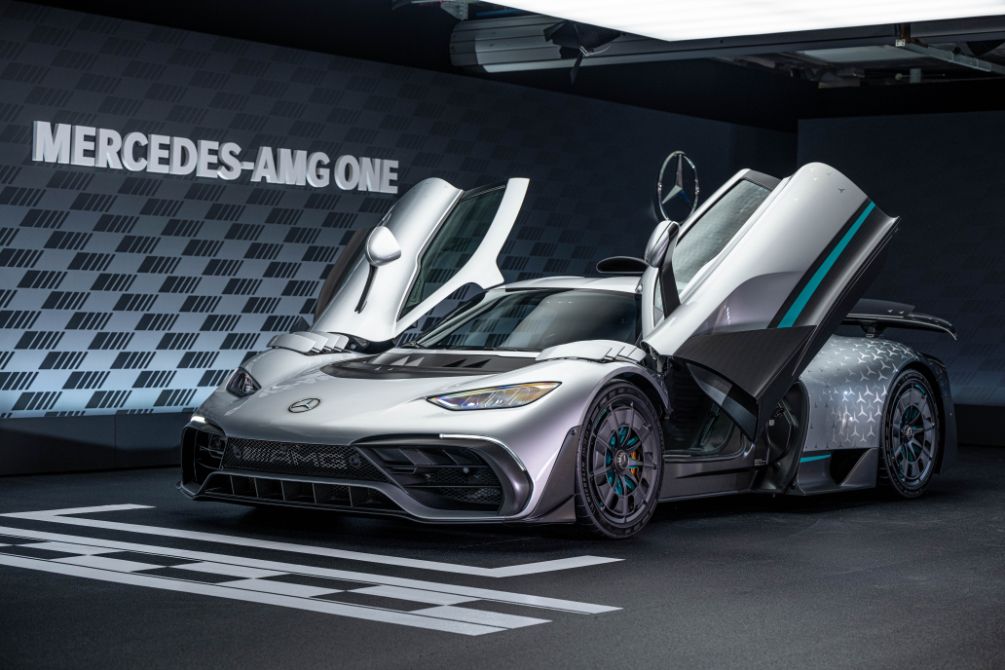
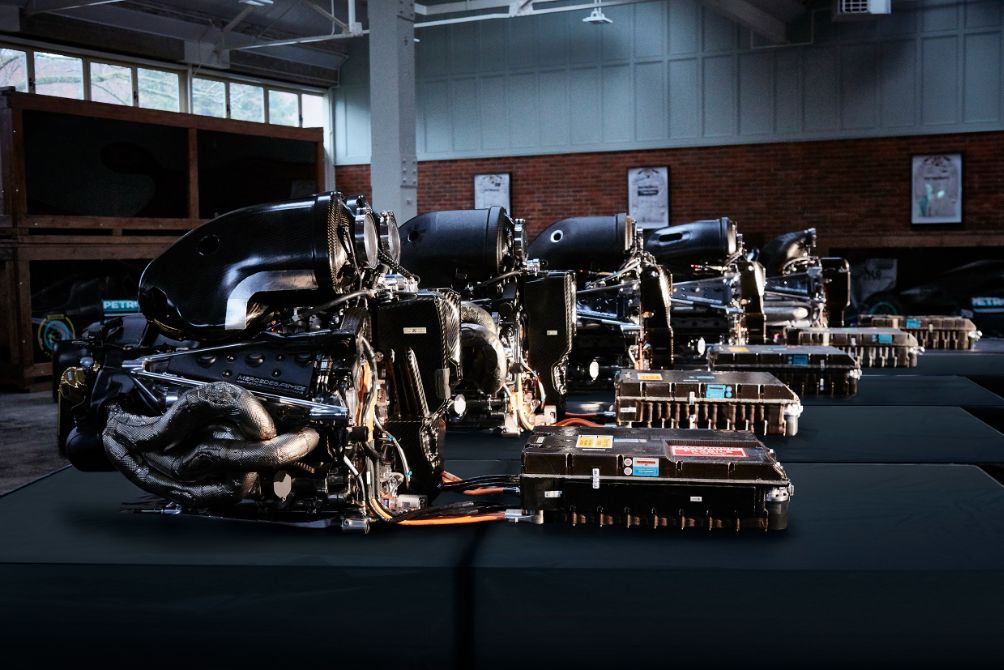
The Mercedes-AMG One can justifiably claim to be the pinnacle of roadgoing combustion engine technology. However, the car’s cutting-edge powertrain can trace its origins back over a decade.

In 2012 engineers at what is now Mercedes AMG High Performance Powertrains in Brixworth, UK, were deep into the development of an engine, or to put it more precisely, a power unit, that would dominate Formula 1’s soon-to-arrive hybrid era.

The challenge facing engineering director Andy Cowell’s team was very different to that which they were used to. This was the era of 2.4-liter, naturally aspirated, port-injection V8s in F1 that revved to the stratosphere. (Before cost control measures in 2007 put an end to such excesses, Cosworth successfully ran its CA V8 to over 20,000rpm). But F1 was about to undergo a seismic shift.

In 2014, V8s would be consigned to history, replaced by 1,600cc, turbocharged, direct-injection V6s featuring energy recovery from both kinetic and exhaust gas-driven electric machines. Even more significantly, the rules would place a hard ceiling on fuel usage, with a fuel flow limit of 100kg/h and a maximum fuel load per race of 100kg. Combustion and overall powertrain efficiency would be king, and the team that managed to coax the greatest propulsive effort from every drop of fuel would hold an advantage.

The result were engines from Mercedes, Ferrari, Renault and later Honda, that pushed efficiency to levels previously thought impossible. In that first year, Mercedes admitted that its ICE was over 40% TE, and by 2017, overall efficiency (taking into account energy recovery), was over 50%.

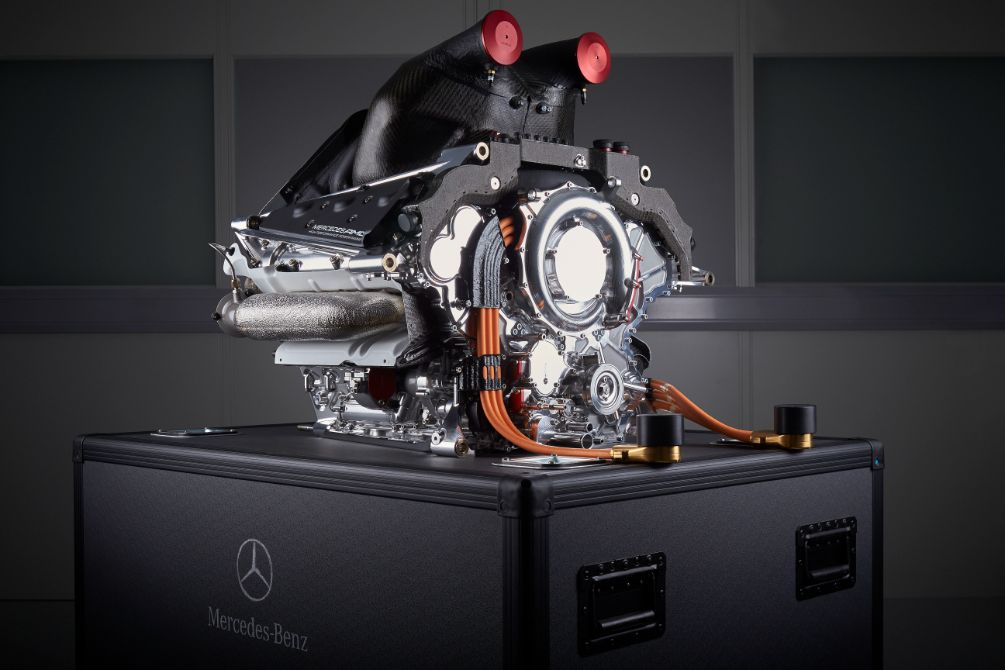
Mercedes committed early to development of its V6 engine. Single cylinder mules were already running in 2011, despite a late rule change from an I4 global race engine concept to a V6, on the insistence of Ferrari. This early work paid dividends and the Mercedes PU106A, fitted to the F1 WO4 car, dominated that first and subsequent seasons, both in terms of sheer performance and reliability.

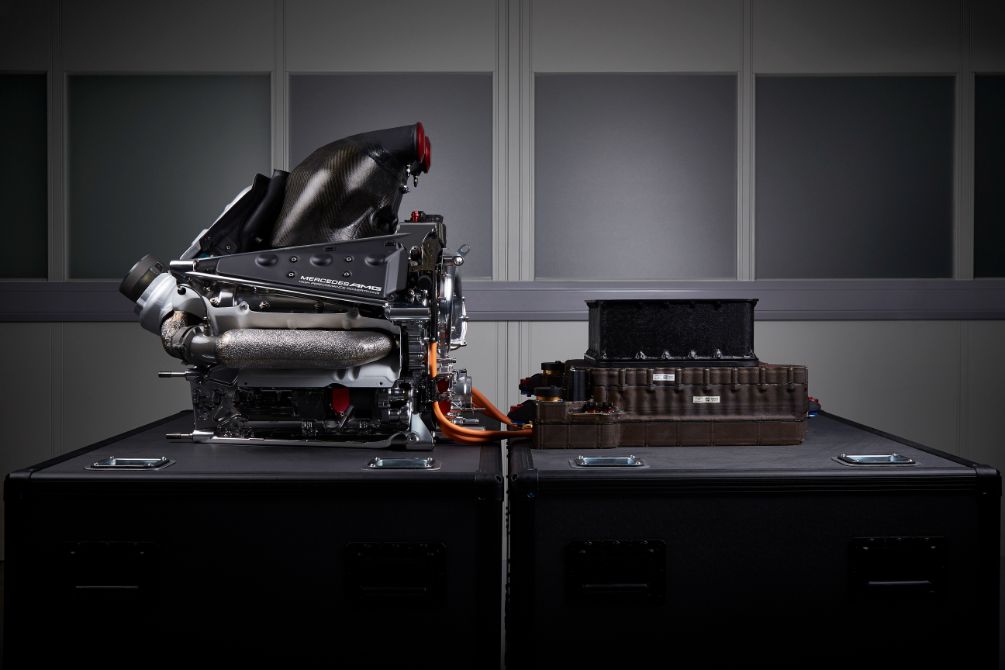
The layout of the PU106A was unique, the compact V6 ICE featured a motor generator unit nestled in the vee of the cylinders, driven by a turbocharger with its compressor mounted at the front of the block and turbine at the rear. Running at up to 120,000rpm, just this one element of the engine, replete as it was with a single, spindly shaft linking all of the rotating parts, dove headfirst into the engineering unknown. The layout was a masterstroke, not least because it allowed for the use of a larger, and more efficient compressor compared to other manufacturers’ solutions that packaged both at the rear.

Of course, there were many more facets to Mercedes’s success beyond the MGU-H. Its unrivalled research into combustion science, working in conjunction with Daimler’s engineers in Stuttgart; an exceptional level of integration between power unit and chassis; pushing the limits of electric motor and battery technology (the 120kW MGU-K weighed a mere 7kg) … all these elements and more combined to deliver an unbeaten run in the F1 constructors’ championship from 2014-21.

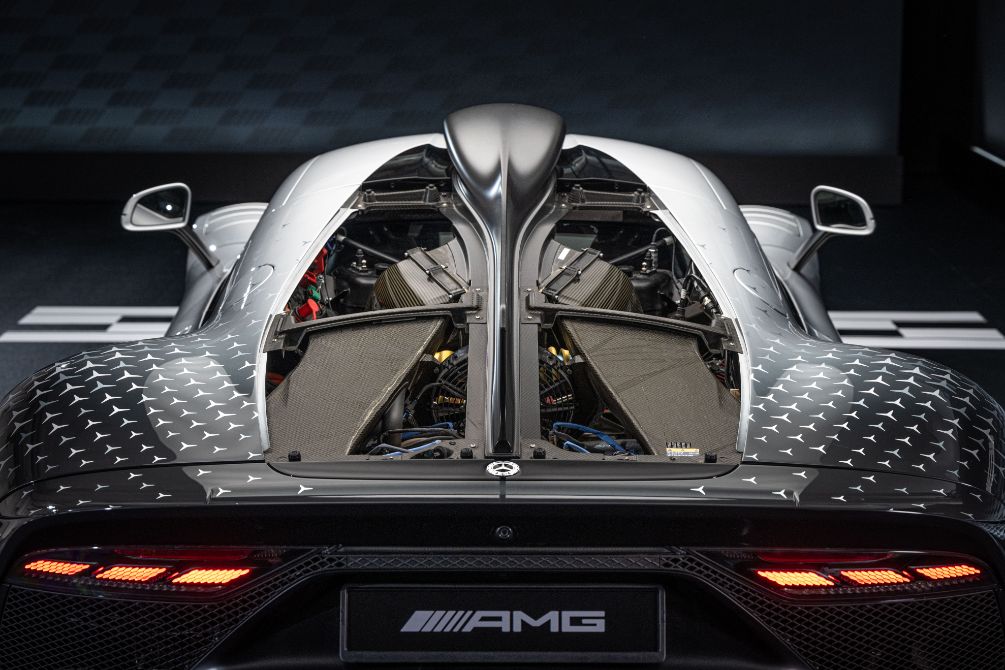
Now this engine, albeit in a detuned form (574bhp vs F1’s 850bhp+) is available on the road. Mercedes admits that getting it there has been as tough a challenge as developing the original race unit. In part thanks to emissions hurdles related to the high NOx levels inherent with such a lean combustion engine, not to mention having to tame a highly strung racing unit to deliver acceptable service intervals and start at the push of a button – without needing supervision by a garage full of engineers.

While other cars can lay claim to having racing ‘derived’ engines, the Mercedes-AMG One stands alone in being a full (albeit limited) production road car with a legitimate F1 powertrain. For this reason, and the fact it is probably the most efficient ICE car ever produced, Mercedes should be applauded.

Share. LinkedIn Twitter Facebook Email

Related Posts

Opinion: Alexander Ertel-Morenstein, the unsung pinoneer of gear science

January 2, 2026

The role of testing in the future of electrified propulsion

December 15, 2025

Why Euro 6e-bis brings another pre-production challenge for OEMs

September 18, 2025
LATEST NEWS

Renault introduces LPG bi-fuel Clio that delivers up to 1,450km range

May 7, 2026

UK consortium secures funding for ReCAM lithium-ion battery recycling project

May 7, 2026

BorgWarner wins turbocharger contracts with two European OEMs

May 7, 2026

Receive breaking stories and features in your inbox each week, for free


Enter your email address:


Supplier Spotlights
  • Reuters Events
Featured Listings
  • There are currently no listings to show.
Getting in Touch
  • Contact Us
  • Media Pack
  • Meet the Editors
  • Free Weekly E-Newsletter
Our Social Channels
  • LinkedIn
Related UKi Topics
  • Automotive Interiors
  • Automotive Testing
  • Autonomous Vehicle
  • Professional Motorsport
  • Tire Technology
  • Media Pack
© 2026 UKi Media & Events a division of UKIP Media & Events Ltd
  • Terms and Conditions
  • Privacy Policy
  • Cookie Policy
  • Notice and Takedown Policy

Type above and press Enter to search. Press Esc to cancel.