

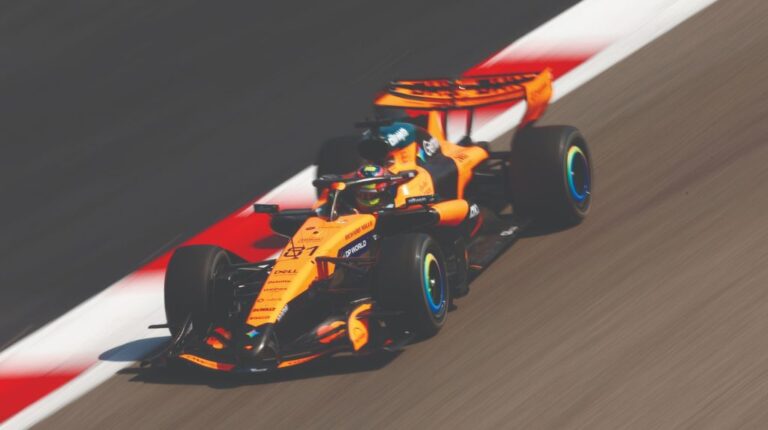
In Formula 1, engineering, reliability and performance are inseparable. Even relatively small components can determine whether a car finishes a race. In some cases, a single component failure can end a race instantly. One such example is the sealing system in the hydraulic actuator of the limited-slip differential used in modern F1 drivetrains.
The limited-slip differential clutch pack plays a central role in torque distribution across the rear axle. By controlling the difference in wheel speed between the rear wheels, the system maximizes traction and stability through cornering. The hydraulic actuator responsible for this function must operate precisely under rapidly changing loads.
In this actuator, sealing integrity is critical. Any significant leakage can lead to a loss of hydraulic pressure, preventing the clutch from functioning as intended and potentially forcing the car to retire from the race.
Operating conditions inside the actuator are demanding. Temperatures can reach approximately 150°C, while system pressures range from 5 to 250 bar. At the same time, the seal must tolerate aggressive transmission fluids and repeated mechanical loading throughout race distances. Components must maintain dimensional stability, resist wear and sustain sealing force despite thermal cycling, pressure variation and chemical exposure.
It is this challenge that the McLaren Mastercard Formula 1 Team sought to address when partnering with Greene Tweed on advanced sealing solutions for its limited-slip differential clutch pack.
Engineering limits in real track conditions
Motorsport environments often expose the limits of theoretical design assumptions. While simulation and material data can provide valuable guidance, component behavior may differ when operating within a complete system. This is due to the complex interaction of thermal, mechanical and chemical conditions, which directly influence stresses and material behavior.
In a Formula 1 drivetrain, thermal loads, hydraulic pressure, mechanical motion and fluid interaction occur simultaneously within tightly packaged assemblies. These factors influence friction, wear patterns and long-term dimensional stability, particularly for sealing components.
As a result, validation under representative operating conditions becomes essential. Dynamic testing allows engineers to observe how materials respond over time, identify potential failure modes and refine designs before deployment on track.
Development of the sealing solution
Addressing the demands of the differential actuator requires a sealing architecture capable of consistent performance across wide ranges of pressures, temperatures and dynamic conditions.
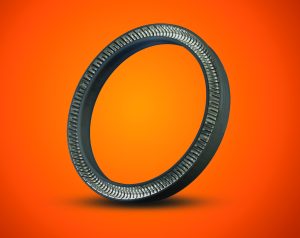
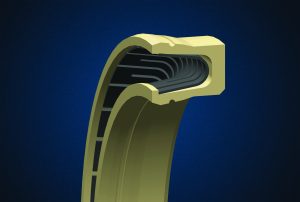
For this application, engineers selected a metal spring-energized sealing design. The configuration combines a C-shaped polymer jacket with an internal corrosion-resistant metal spring, ensuring consistent sealing force regardless of system pressure. This architecture helps sustain contact between the seal and the mating surface as pressure and temperature fluctuate.
The sealing jacket is manufactured from a specialized PTFE-based material engineered to balance several performance requirements. Improved material strength supports dimensional stability under pressure, while wear resistance contributes to long operational life. Low creep relaxation helps preserve sealing force over time, and low friction properties support smooth actuator movement.
Together, these characteristics allow the sealing assembly to operate effectively within the actuator’s demanding environment. The spring-energized seal maintains an effective sealing force under conditions where system pressure is low, while the polymer jacket provides chemical compatibility, low friction and durability.
Dynamic testing and design refinement
Although seal pedigree, modeling, and material data can help guide early design decisions, physical validation ultimately determines whether a component is suitable for high-performance applications.
To replicate operational conditions as closely as possible, engineers conducted validation testing on a dynamic transmission test rig. This environment reproduced realistic pressure cycling, temperature exposure and mechanical loading similar to those experienced in a working drivetrain.
Testing provided insights into how the sealing assembly behaved under sustained dynamic loads, particularly the effects of pressure fluctuations and thermal cycling on deformation and long-term stability. These conditions could not be fully captured through static testing alone.
Engineers adjusted the sealing configuration to improve resistance to deformation under high pressure and elevated temperature conditions. Through this iterative testing and design refinement, the team qualified the sealing system for use in demanding motorsport conditions.
Enabling system evolution and packaging
Reliable sealing performance can influence broader system design decisions. In high-performance vehicles, engineers continuously seek opportunities to improve packaging efficiency while maintaining reliability.
By delivering consistent sealing performance under extreme thermal, pressure and fluid conditions, the solution increased confidence in system reliability. This enabled engineers to develop a more compact differential architecture without compromising performance.
Improved reliability margins supported packaging optimization and weight reduction – both critical factors in Formula 1 performance.
The sealing solution has been successfully deployed in McLaren’s Formula 1 cars since the 2022 season, demonstrating sustained reliability under real race conditions. Ongoing refinements have strengthened system performance and supported continued drivetrain development, culminating in a next-generation system and seal assembly qualified for the 2026 season.
Engineering considerations for high-pressure motorsport systems
The development of sealing solutions for high-performance motorsport applications highlights several broader engineering principles.
First, sealing performance directly influences system reliability. In hydraulic control systems, even small leaks can disrupt pressure regulation and compromise overall functionality. Seal integrity and efficiency must therefore be treated as a primary design parameter.
Second, validation under combined operating stressors is essential. Factors such as thermal loads, pressure variation, mechanical movement and chemical exposure interact in ways that cannot always be predicted through simulation alone. Dynamic testing provides critical insight into how a seal assembly behaves within realistic system environments.
Finally, close collaboration between system engineers and seal design engineers can significantly accelerate development. Early engagement allows sealing technology to be effectively integrated into the system architecture rather than treated as a late-stage component selection.
In high-performance environments such as Formula 1, where marginal gains and reliability determine race outcomes, these collaborative engineering approaches between Greene Tweed and the McLaren Mastercard Formula 1 Team help ensure that every component performs. Crucially, the lessons learned extend beyond motorsport, informing sealing design strategies in industries such as aerospace, energy and advanced manufacturing, where reliability under extreme conditions is critical.