
Close Menu
  • News
      • Appointments
      • EV Powertrain
      • Emissions
      • Engine Components
      • Electronics
      • Facility Developments
      • Forced Induction
      • Fuel Cell Technologies
      • Fuels & Lubricants
      • Heavy-duty & Diesel Engine Technologies
      • Hybrid Powertrain Technologies
      • Industry Forecasting
      • Legislation
      • Materials & Surface Treatment
      • Metallurgy
      • Mild-hybrid & 48V Technologies
      • New powertrain
      • Partnerships, Investments & Acquisitions
      • Quality Control
      • Prototyping
      • Sustainable fuels
      • Testing
      • Traction Control Systems
      • Transmissions Technologies
      • Webinars
  • Features
  • Online Magazines
    • April 2026
    • January 2026
    • September 2025
    • June 2025
    • March 2025
    • January 2025
    • September 2024
    • Subscribe to Automotive Powertrain Technology
    • Transmission Technology International
    • Subscribe to Transmission Technology
  • Opinion
  • Events
  • Supplier Spotlight
  • Webinars
Facebook X (Twitter) Instagram
  • Automotive Interiors
  • Automotive Testing
  • Autonomous Vehicle
  • Professional Motorsport
  • Tire Technology
  • Media Pack
LinkedIn
Subscribe
Automotive Powertrain Technology International
  • News
      • Appointments
      • EV Powertrain
      • Emissions
      • Engine Components
      • Electronics
      • Facility Developments
      • Forced Induction
      • Fuel Cell Technologies
      • Fuels & Lubricants
      • Heavy-duty & Diesel Engine Technologies
      • Hybrid Powertrain Technologies
      • Industry Forecasting
      • Legislation
      • Materials & Surface Treatment
      • Metallurgy
      • Mild-hybrid & 48V Technologies
      • New powertrain
      • Partnerships, Investments & Acquisitions
      • Quality Control
      • Prototyping
      • Sustainable fuels
      • Testing
      • Traction Control Systems
      • Transmissions Technologies
      • Webinars
  • Features
  • Online Magazines
    1. April 2026
    2. January 2026
    3. September 2025
    4. June 2025
    5. March 2025
    6. January 2025
    7. September 2024
    8. Subscribe to Automotive Powertrain Technology
    9. Transmission Technology International
    10. Subscribe to Transmission Technology
    Featured

    In this Issue – April 2026

    By Web TeamMay 1, 2026
    Recent

    In this Issue – April 2026

    May 1, 2026

    In this Issue – January 2026

    December 3, 2025

    In this Issue – September 2025

    September 25, 2025
  • Opinion
  • Events
  • Supplier Spotlight
  • Webinars
LinkedIn Facebook
Subscribe
Automotive Powertrain Technology International
Hybrid Powertrain Technologies

Mahle Powertrain on the future of the gasoline IC engine

Sam PettersBy Sam PettersDecember 12, 20173 Mins Read
LinkedIn Twitter Facebook Email
Mahle Powertrain on the future of the gasoline IC engine
Share
LinkedIn Twitter Facebook Email

Life for automotive manufacturers, especially in the powertrain department, is increasingly complicated. Given the rush toward pure EVs by most global OEMs and the recent statement by the UK government that it will outlaw vehicle powertrains that run solely on fossil fuels by 2040, it’s easy to see why many powertrain engineers see themselves at a technology crossroads. And, while political aspirations in the UK and other western economies are anticipating an EV-only future, pragmatic engineers need to balance political desires with the laws of physics.

Whatever the details of the 2040 ultimatum, it’s highly likely that some form of engine hybridization will be central to powertrain development for the next few decades at the very least. Moreover, the recently introduced RDE test puts OEMs under even more pressure to deliver clean, efficient engines. Given the dynamic and variable nature of the legislative requirements facing vehicle manufacturers, Mahle Powertrain is taking a much more consultative approach to the engine development process.

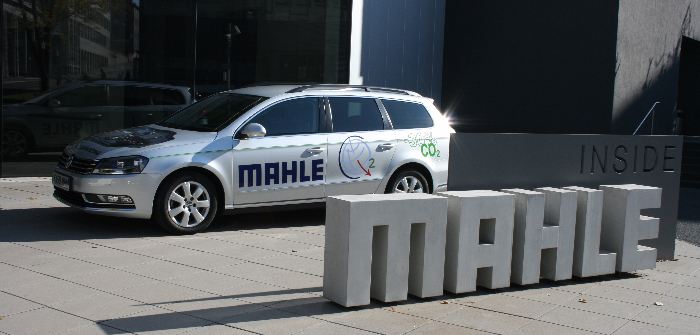
In 2007 the research team at Northampton began development of a heavily downsized, 1.2-liter, 3-cylinder, gasoline engine that achieved, at that time, ground-breaking levels of specific torque (BMEP). Referred to as the DI-3 engine, this unit replaced the original V6 engine in a standard VW Passat.

“With the new RDE test procedures now in force, getting the most efficient performance possible out of downsized engines over a wide operating range is the key challenge over the coming years, as OEMs seek to meet forthcoming vehicle CO2 targets,” said Mike Bassett, chief engineer at Mahle. “48V mild-hybridization is set to be a key technology that is widely adopted to help achieve these targets.”

Not content with regular downsizing, Mahle Powertrain has also been exploring the potential benefits of running downsized engines on alternative fuels such as CNG. Showing how the ongoing development of the combustion engine continues to be worthwhile, Mahle’s CNG optimized engine design has produced a 31% reduction in CO2 emissions, compared with the original VW gasoline engine.

Mahle’s eSupercharged, downsized, 48V demonstrator vehicle is a prime example of the mild-hybrid engine in action. However, hybridization should not be restricted to immediate support of the combustion engine, with boosting, start-stop functionality or hybridization, for instance. Mahle’s experience points to a far more integral role that should entail advanced measures in the vehicle, such as thermal management or the electrification of engine accessories.

“We’ve shown that even relatively small steps in electrification can achieve a sustainable effect in the combustion engine powertrain with a conventional 12V electrical system,” added Bassett. “For example, electric actuators enable faster and more precise control of the combustion engine. Simply by replacing the pneumatic wastegate actuator with an electric variant, CO2 savings of 2% can be achieved. Rounded out by additional ‘light’ electrification steps, such as electric thermostats, EGR valves, power steering motors and stop-start functionality, CO2 savings of up to 8% in total are possible.”

Given the fast-moving nature of the various emissions regulations across different territories, the choices facing powertrain engineers for future models is complex. While the powertrain technologies available – such as EVs, CNG, hydrogen fuel cells and mild/full hybrids – is almost endless, one thing is certain: the internal combustion engine will continue to play a central role in vehicle propulsion for decades to come.

Share. LinkedIn Twitter Facebook Email

Related Posts

New chassis and powertrain event to launch at Vehicle Tech Week North America 2026

May 6, 2026

Kistler releases new water-cooled adapter for miniature absolute pressure sensor

April 30, 2026

Project Cavendish: Mahle hydrogen-fueled 13-liter engine matches diesel performance

April 23, 2026
LATEST NEWS

Renault introduces LPG bi-fuel Clio that delivers up to 1,450km range

May 7, 2026

UK consortium secures funding for ReCAM lithium-ion battery recycling project

May 7, 2026

BorgWarner wins turbocharger contracts with two European OEMs

May 7, 2026

Receive breaking stories and features in your inbox each week, for free


Enter your email address:


Supplier Spotlights
  • ETO GRUPPE
Featured Listings
  • There are currently no listings to show.
Getting in Touch
  • Contact Us
  • Media Pack
  • Meet the Editors
  • Free Weekly E-Newsletter
Our Social Channels
  • LinkedIn
Related UKi Topics
  • Automotive Interiors
  • Automotive Testing
  • Autonomous Vehicle
  • Professional Motorsport
  • Tire Technology
  • Media Pack
© 2026 UKi Media & Events a division of UKIP Media & Events Ltd
  • Terms and Conditions
  • Privacy Policy
  • Cookie Policy
  • Notice and Takedown Policy

Type above and press Enter to search. Press Esc to cancel.