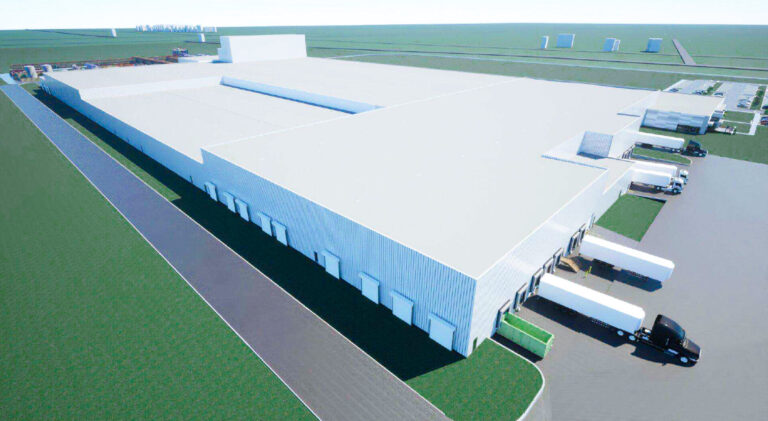
Materials manufacturer Asahi Kasei has announced plans to construct a lithium-ion battery separator plant in Ontario, Canada, which will focus on the manufacturing and coating of Hipore wet-process lithium-ion battery (LIB) separators.
A lithium-ion battery separator is a microporous membrane that provides a barrier between the positive and negative electrodes of a lithium-ion battery, allowing lithium ions to pass through while preventing short circuits.
The company has also entered into a basic agreement with Honda Motor to explore joint investment opportunities for this project, with a view to establishing a supply chain for high-performance batteries for the North American EV market.
“To achieve carbon neutrality, Honda is targeting 100% of global sales from EVs and FCVs by 2040,” said Manabu Ozawa, managing executive officer of Honda.
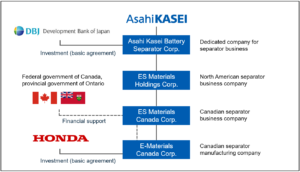
The Canadian plant, scheduled to be operational in 2027, will receive financial support from various sources, including the Development Bank of Japan (DBJ) and the federal and provincial governments of Canada. The total investment amount for this project is approximately ¥180 billion, with a projected production capacity of approximately 700 million m2 per year (as coated film).
The decision to establish the manufacturing plant in Ontario aligns with Asahi Kasei’s focus on its energy storage business segment, particularly the Hipore wet-process LIB separator.
Configuration of investment in North America
“The separator is an extremely important component that contributes to higher performance and durability of batteries that are essential to EVs,” added Ozawa.
Asahi Kasei’s expansion aims to meet the increasing demand for battery separators in North America, driven by the growing market for plug-in electric vehicles (EVs) and governmental clean energy policies.
Hiroyoshi Matsuyama, senior executive officer of Asahi Kasei, added, “This partnership with Honda, having a rich track record in the North American automotive market and aggressively electrifying its vehicle line-up, allows us to make a meaningful contribution to the improvement of lithium-ion-battery performance in light of the anticipated growth in the electric vehicle market and the energy transition in North America.”

 By Izzy Wood