

Close Menu
  • News
      • Appointments
      • EV Powertrain
      • Emissions
      • Engine Components
      • Electronics
      • Facility Developments
      • Forced Induction
      • Fuel Cell Technologies
      • Fuels & Lubricants
      • Heavy-duty & Diesel Engine Technologies
      • Hybrid Powertrain Technologies
      • Industry Forecasting
      • Legislation
      • Materials & Surface Treatment
      • Metallurgy
      • Mild-hybrid & 48V Technologies
      • New powertrain
      • Partnerships, Investments & Acquisitions
      • Quality Control
      • Prototyping
      • Sustainable fuels
      • Testing
      • Traction Control Systems
      • Transmissions Technologies
      • Webinars
  • Features
  • Online Magazines
    • April 2026
    • January 2026
    • September 2025
    • June 2025
    • March 2025
    • January 2025
    • September 2024
    • Subscribe to Automotive Powertrain Technology
    • Transmission Technology International
    • Subscribe to Transmission Technology
  • Opinion
  • Supplier Spotlight
  • Webinars
Facebook X (Twitter) Instagram
  • Automotive Interiors
  • Automotive Testing
  • Autonomous Vehicle
  • Professional Motorsport
  • Tire Technology
  • Media Pack
LinkedIn
Subscribe
Automotive Powertrain Technology International
  • News
      • Appointments
      • EV Powertrain
      • Emissions
      • Engine Components
      • Electronics
      • Facility Developments
      • Forced Induction
      • Fuel Cell Technologies
      • Fuels & Lubricants
      • Heavy-duty & Diesel Engine Technologies
      • Hybrid Powertrain Technologies
      • Industry Forecasting
      • Legislation
      • Materials & Surface Treatment
      • Metallurgy
      • Mild-hybrid & 48V Technologies
      • New powertrain
      • Partnerships, Investments & Acquisitions
      • Quality Control
      • Prototyping
      • Sustainable fuels
      • Testing
      • Traction Control Systems
      • Transmissions Technologies
      • Webinars
  • Features
  • Online Magazines
    1. April 2026
    2. January 2026
    3. September 2025
    4. June 2025
    5. March 2025
    6. January 2025
    7. September 2024
    8. Subscribe to Automotive Powertrain Technology
    9. Transmission Technology International
    10. Subscribe to Transmission Technology
    Featured

    In this Issue – April 2026

    By Web TeamMay 1, 2026
    Recent

    In this Issue – April 2026

    May 1, 2026

    In this Issue – January 2026

    December 3, 2025

    In this Issue – September 2025

    September 25, 2025
  • Opinion
  • Supplier Spotlight
  • Webinars
LinkedIn Facebook
Subscribe
Automotive Powertrain Technology International
Electric Powertrain Technologies

Denso develops its first inverter using SiC power semiconductors

Callum Brook-JonesBy Callum Brook-JonesApril 4, 20232 Mins Read
LinkedIn Twitter Facebook Email
Share
LinkedIn Twitter Facebook Email

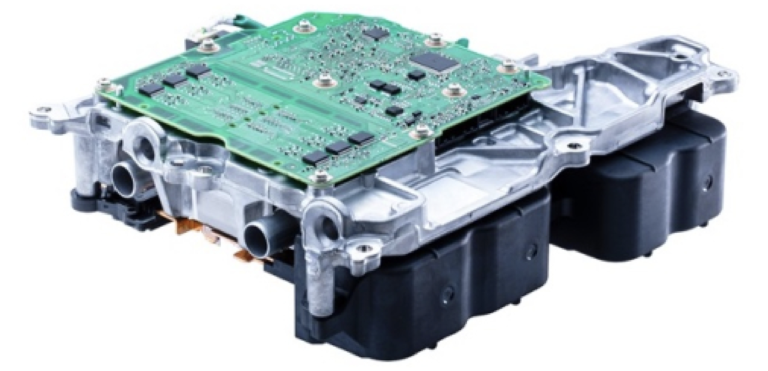
Denso has created its first inverter with silicon carbide (SiC) semiconductors, which will be integrated into the eAxle, an electric driving module developed by the BluE Nexus Corporation for the new Lexus RZ – the OEM’s first dedicated BEV model.

SiC power semiconductors can considerably reduce power loss compared with silicon (Si) power semiconductors. The results of a cruising test conducted under specific conditions by a BEV using SiC semiconductor inverters showed that inverters with SiC power semiconductors reduced power loss to less than half compared with inverters using Si semiconductors. The energy efficiency of BEVs is therefore enhanced and cruising range extended.

When used within SiC power semiconductors, Denso’s trench-type metal-oxide-semiconductor (MOS) structure enhances the output per chip as the components reduce power loss caused by heat generation. The company’s proprietary structure achieves high voltage and low on-resistance operation.

Based on technology collaboratively developed by Denso and Toyota Central R&D Labs, Denso uses SiC epitaxial wafers that incorporate the results of work commissioned by the New Energy and Industrial Technology Development Organization (NEDO). This has enabled the company to halve the number of crystal defects that prevent the device from operating normally due to the disordered atomic arrangement of the crystals. Reducing these crystal defects increases quality and ensures stable production.

Denso’s SiC technology is called Revosic. It is being used by the company to develop everything from wafers to semiconductor devices and modules, including power cards.

Share. LinkedIn Twitter Facebook Email

Related Posts

New chassis and powertrain event to launch at Vehicle Tech Week North America 2026

May 6, 2026

AI-defined vehicles and expanded electrification shape Nissan’s future mobility strategy

April 20, 2026

Nissan launches electric Juke

April 16, 2026
LATEST NEWS

Renault introduces LPG bi-fuel Clio that delivers up to 1,450km range

May 7, 2026

UK consortium secures funding for ReCAM lithium-ion battery recycling project

May 7, 2026

BorgWarner wins turbocharger contracts with two European OEMs

May 7, 2026

Receive breaking stories and features in your inbox each week, for free


Enter your email address:


Supplier Spotlights
  • The Institute for Advanced Automotive Propulsion Systems
Featured Listings
  • There are currently no listings to show.
Getting in Touch
  • Contact Us
  • Media Pack
  • Meet the Editors
  • Free Weekly E-Newsletter
Our Social Channels
  • LinkedIn
Related UKi Topics
  • Automotive Interiors
  • Automotive Testing
  • Autonomous Vehicle
  • Professional Motorsport
  • Tire Technology
  • Media Pack
© 2026 UKi Media & Events a division of UKIP Media & Events Ltd
  • Terms and Conditions
  • Privacy Policy
  • Cookie Policy
  • Notice and Takedown Policy

Type above and press Enter to search. Press Esc to cancel.