
Close Menu
  • News
      • Appointments
      • EV Powertrain
      • Emissions
      • Engine Components
      • Electronics
      • Facility Developments
      • Forced Induction
      • Fuel Cell Technologies
      • Fuels & Lubricants
      • Heavy-duty & Diesel Engine Technologies
      • Hybrid Powertrain Technologies
      • Industry Forecasting
      • Legislation
      • Materials & Surface Treatment
      • Metallurgy
      • Mild-hybrid & 48V Technologies
      • New powertrain
      • Partnerships, Investments & Acquisitions
      • Quality Control
      • Prototyping
      • Sustainable fuels
      • Testing
      • Traction Control Systems
      • Transmissions Technologies
      • Webinars
  • Features
  • Online Magazines
    • April 2026
    • January 2026
    • September 2025
    • June 2025
    • March 2025
    • January 2025
    • September 2024
    • Subscribe to Automotive Powertrain Technology
    • Transmission Technology International
    • Subscribe to Transmission Technology
  • Opinion
  • Supplier Spotlight
  • Webinars
Facebook X (Twitter) Instagram
  • Automotive Interiors
  • Automotive Testing
  • Autonomous Vehicle
  • Professional Motorsport
  • Tire Technology
  • Media Pack
LinkedIn
Subscribe
Automotive Powertrain Technology International
  • News
      • Appointments
      • EV Powertrain
      • Emissions
      • Engine Components
      • Electronics
      • Facility Developments
      • Forced Induction
      • Fuel Cell Technologies
      • Fuels & Lubricants
      • Heavy-duty & Diesel Engine Technologies
      • Hybrid Powertrain Technologies
      • Industry Forecasting
      • Legislation
      • Materials & Surface Treatment
      • Metallurgy
      • Mild-hybrid & 48V Technologies
      • New powertrain
      • Partnerships, Investments & Acquisitions
      • Quality Control
      • Prototyping
      • Sustainable fuels
      • Testing
      • Traction Control Systems
      • Transmissions Technologies
      • Webinars
  • Features
  • Online Magazines
    1. April 2026
    2. January 2026
    3. September 2025
    4. June 2025
    5. March 2025
    6. January 2025
    7. September 2024
    8. Subscribe to Automotive Powertrain Technology
    9. Transmission Technology International
    10. Subscribe to Transmission Technology
    Featured

    In this Issue – April 2026

    By Web TeamMay 1, 2026
    Recent

    In this Issue – April 2026

    May 1, 2026

    In this Issue – January 2026

    December 3, 2025

    In this Issue – September 2025

    September 25, 2025
  • Opinion
  • Supplier Spotlight
  • Webinars
LinkedIn Facebook
Subscribe
Automotive Powertrain Technology International
Opinion

Tight future for the fanbelt?

Michael Taylor, ETi columnistBy Michael Taylor, ETi columnistJune 12, 20174 Mins Read
LinkedIn Twitter Facebook Email
Tight future for the fanbelt?
Share
LinkedIn Twitter Facebook Email

The bits inside an internal-combustion engine will keep going fizz, whiz and bang for as long as I’ll be around, I suspect.

There’s not much point in calling the things ‘internal combustion’ engines if stuff doesn’t combust inside them anymore. It’d be like having a scripted reality television show or Cadbury Dairy Milk chocolate with almost no milk and almost no chocolate, or a Formula 1 championship with contrived overtaking. It just wouldn’t be authentic.

So, as far as I can tell from the engineers around the world I talk to, that bit inside is safe. Nobody’s talking about square or oval cylinders, nobody’s talking (much) about rotary valves and nobody (outside a certain asylum in Hiroshima) talks about rotary engines saving the planet.

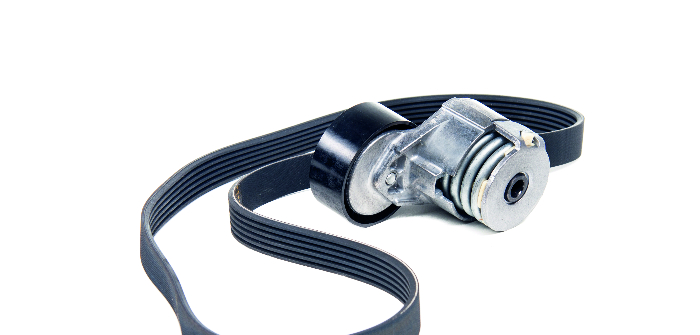
It might be that someone comes up with a bore liner even slipperier than nanoslide, or that there’ll be some wacky piston design come out or an even wackier conrod concept, but the basics of a chamber where stuff ignites and pushes something aren’t open to negotiation. Everything else is, though. And one thing we might be saying goodbye to is the fanbelt. Fanbelts once played a proud and noble role, dignified in their single-plane of operation, to simply keep the engine brimming with freshly cooled thermal bait.

They were heady days for the fanbelt. Everybody, from the most Luddite executive to the most domesticated of housewives, knew what a fanbelt was and everybody knew where to find a new one when the things inevitably failed.

My dad always carried a spare fanbelt (and spare spark plugs, a points file, a distributor rotor and, and, and), and so did any right-minded family patriarch. For all their fame, it was amazing how often they failed. The only reason it made sense to me, though, was because nobody was much into belt-driven bicycles or motorbikes in the 1970s.

Any trip into the Outback meant at least two or three spare fanbelts. I’ve seen my own father adopt the mythical method of using women’s pantyhose as a replacement. Dad said they were there for just such an emergency, but I was never convinced.

Aside from being just a bit weird, the other thing about the pantyhose trick they don’t tell you is that it only works for about 5km. Where I lived, 5km only got you further away from the middle of nothing, so it wasn’t much help.

Dad even experimented, on long drives, with taking the fan off altogether, relying on the sustained airflow to keep things going. He did this because someone (never knew who, but even to a kid it seemed a dim concept) told him it would improve his fuel economy, what with the fanbelt driving both the water circuit and the fan. Surely just one would do. Didn’t end either well or badly, surprisingly, but the fuel economy benefits were as obvious as wheel alignments on shopping carts.

Then fanbelts went all serpentine and lost their spiritual purity. Lost their simplicity, too, and good luck finding any average guy capable of negotiating lingerie around the ludicrous array of pulleys on a late-1980s Ford Falcon, with air-conditioning and power steering.

It feels like late-1960s rock-and-roll all over again, that phase where everybody went electric while Johnny Cash was in prison (as a guest, not as a guest), thereby inventing modern country music. Or something like that.

On most top-end cars (and therefore, soon, the rest), the water pump, the main job of the fanbelt, has gone electric. The fan itself has gone electric. The oil pumps are electric and on demand, and so are the power-steering pump and air-conditioning compressor. Benz’s new in-line six has the integrated starter/generator, so that’s another thing that doesn’t need crank power to be spun.

It’s really kind of sad. And whenever I see a pair of pantyhose in dad’s car, I can’t look him in the eye anymore, because unless he’s robbing a bank (and most robbers move with more haste than him), he’s all out of excuses…

Share. LinkedIn Twitter Facebook Email

Related Posts

The critical engineering area overlooked by OEMs

May 20, 2026

Opinion: Alexander Ertel-Morenstein, the unsung pinoneer of gear science

January 2, 2026

The role of testing in the future of electrified propulsion

December 15, 2025
LATEST NEWS

Ferrari unveils all-electric Luce

May 29, 2026

Scania under-cab battery module and Megawatt Charging System available for order

May 29, 2026

Maserati Nettuno engine transformed into 480kW hydrogen race unit

May 29, 2026

Receive breaking stories and features in your inbox each week, for free


Enter your email address:


Supplier Spotlights
  • The Battery Show and Electric & Hybrid Vehicle Technology Expo
Featured Listings
  • There are currently no listings to show.
Getting in Touch
  • Contact Us
  • Media Pack
  • Meet the Editors
  • Free Weekly E-Newsletter
Our Social Channels
  • LinkedIn
Related UKi Topics
  • Automotive Interiors
  • Automotive Testing
  • Autonomous Vehicle
  • Professional Motorsport
  • Tire Technology
  • Media Pack
© 2026 UKi Media & Events a division of UKIP Media & Events Ltd
  • Terms and Conditions
  • Privacy Policy
  • Cookie Policy
  • Notice and Takedown Policy

Type above and press Enter to search. Press Esc to cancel.