
Close Menu
  • News
      • Appointments
      • EV Powertrain
      • Emissions
      • Engine Components
      • Electronics
      • Facility Developments
      • Forced Induction
      • Fuel Cell Technologies
      • Fuels & Lubricants
      • Heavy-duty & Diesel Engine Technologies
      • Hybrid Powertrain Technologies
      • Industry Forecasting
      • Legislation
      • Materials & Surface Treatment
      • Metallurgy
      • Mild-hybrid & 48V Technologies
      • New powertrain
      • Partnerships, Investments & Acquisitions
      • Quality Control
      • Prototyping
      • Sustainable fuels
      • Testing
      • Traction Control Systems
      • Transmissions Technologies
      • Webinars
  • Features
  • Online Magazines
    • April 2026
    • January 2026
    • September 2025
    • June 2025
    • March 2025
    • January 2025
    • September 2024
    • Subscribe to Automotive Powertrain Technology
    • Transmission Technology International
    • Subscribe to Transmission Technology
  • Opinion
  • Events
  • Supplier Spotlight
  • Webinars
Facebook X (Twitter) Instagram
  • Automotive Interiors
  • Automotive Testing
  • Autonomous Vehicle
  • Professional Motorsport
  • Tire Technology
  • Media Pack
LinkedIn
Subscribe
Automotive Powertrain Technology International
  • News
      • Appointments
      • EV Powertrain
      • Emissions
      • Engine Components
      • Electronics
      • Facility Developments
      • Forced Induction
      • Fuel Cell Technologies
      • Fuels & Lubricants
      • Heavy-duty & Diesel Engine Technologies
      • Hybrid Powertrain Technologies
      • Industry Forecasting
      • Legislation
      • Materials & Surface Treatment
      • Metallurgy
      • Mild-hybrid & 48V Technologies
      • New powertrain
      • Partnerships, Investments & Acquisitions
      • Quality Control
      • Prototyping
      • Sustainable fuels
      • Testing
      • Traction Control Systems
      • Transmissions Technologies
      • Webinars
  • Features
  • Online Magazines
    1. April 2026
    2. January 2026
    3. September 2025
    4. June 2025
    5. March 2025
    6. January 2025
    7. September 2024
    8. Subscribe to Automotive Powertrain Technology
    9. Transmission Technology International
    10. Subscribe to Transmission Technology
    Featured

    In this Issue – April 2026

    By Web TeamMay 1, 2026
    Recent

    In this Issue – April 2026

    May 1, 2026

    In this Issue – January 2026

    December 3, 2025

    In this Issue – September 2025

    September 25, 2025
  • Opinion
  • Events
  • Supplier Spotlight
  • Webinars
LinkedIn Facebook
Subscribe
Automotive Powertrain Technology International
New Engine

Audi equips Q4 Sportback e-tron with PM and induction motors

Lawrence ButcherBy Lawrence ButcherJuly 8, 20202 Mins Read
LinkedIn Twitter Facebook Email
Share
LinkedIn Twitter Facebook Email

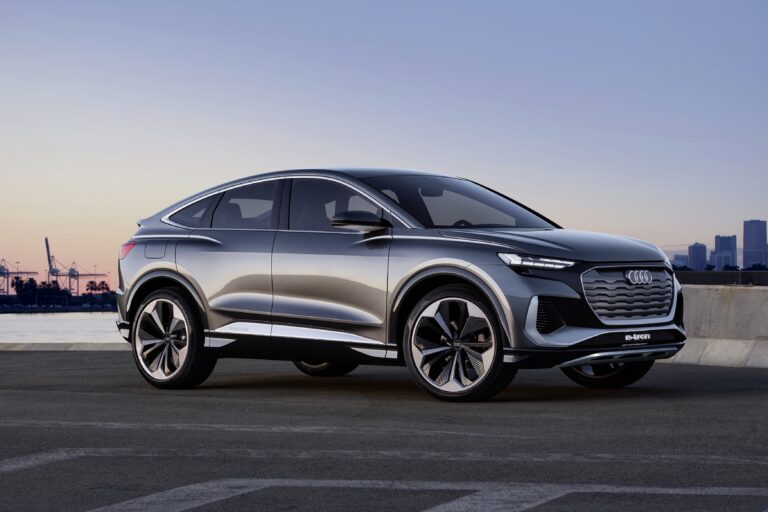
The mid-size e-SUV market looks to be heating up with Audi’s unveiling of its Q4 Sportback e-tron, a coupe version of the Q4 e-tron revealed in 2019, which is based on the VW Group’s MEB platform.

The Q4 will feature two drive motors, one front, one rear, with outputs of 150kW and 75kW respectively, which are fed by an 82kWh battery mounted in the floor. Audi stated that the charging system will be rated at 125KW, giving a 30-minute charge time to 80% capacity and a range in excess of 279 miles on the WLTP. The company noted that in day-to-day driving, the rear motor will provide the bulk of drive.

It is interesting that Audi has opted for a blend of motor types in the Q4. The rear motor is a permanent magnet unit, while the front is an asynchronous induction type. With the front motor only in use some of the time, an induction motor means there will be no associated losses due to magnets in the unused motor. Notably, Audi has used aluminum for the windings in it motors, which are produced at the company’s Győr facility in Hungary. The car is due to go on sale in 2021.

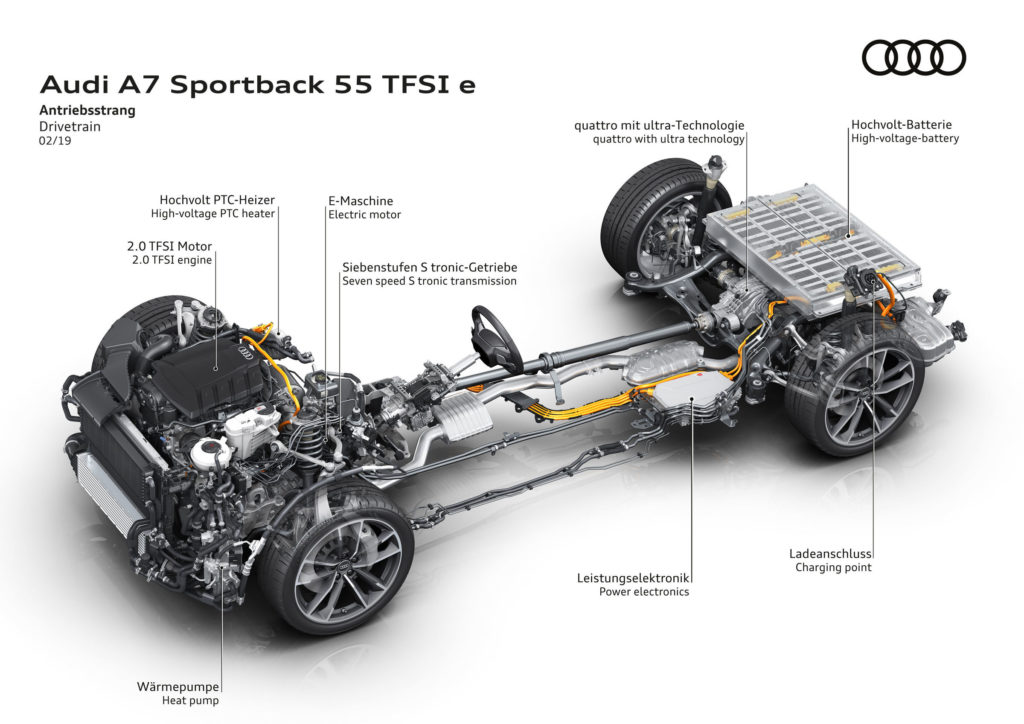
Though the pure EV models from Audi are currently stealing the limelight, the company also announced recently a plug-in hybrid version of the A7 (below). This combines a 2.0 liter, I4, TFSi engine with an electric motor mounted between the engine and 7-speed dual-clutch transmission. The combined output of the IC and EV elements is 362bhp.

Audi said the A7’s lithium-ion battery pack has a capacity of 14.1kWh and operates at 381V. To help bolster efficiency, the climate control system uses a heat pump that pools the waste heat from the high-voltage components and instead uses it to heat the vehicle’s cabin.
Share. LinkedIn Twitter Facebook Email

Related Posts

New chassis and powertrain event to launch at Vehicle Tech Week North America 2026

May 6, 2026

AI-defined vehicles and expanded electrification shape Nissan’s future mobility strategy

April 20, 2026

911 GT3 S/C debuts as lightweight open-top driver’s car with 510ps flat-six engine

April 16, 2026
LATEST NEWS

Renault introduces LPG bi-fuel Clio that delivers up to 1,450km range

May 7, 2026

UK consortium secures funding for ReCAM lithium-ion battery recycling project

May 7, 2026

BorgWarner wins turbocharger contracts with two European OEMs

May 7, 2026

Receive breaking stories and features in your inbox each week, for free


Enter your email address:


Supplier Spotlights
  • Acerta Analytics Solutions, Inc.
Featured Listings
  • There are currently no listings to show.
Getting in Touch
  • Contact Us
  • Media Pack
  • Meet the Editors
  • Free Weekly E-Newsletter
Our Social Channels
  • LinkedIn
Related UKi Topics
  • Automotive Interiors
  • Automotive Testing
  • Autonomous Vehicle
  • Professional Motorsport
  • Tire Technology
  • Media Pack
© 2026 UKi Media & Events a division of UKIP Media & Events Ltd
  • Terms and Conditions
  • Privacy Policy
  • Cookie Policy
  • Notice and Takedown Policy

Type above and press Enter to search. Press Esc to cancel.