

Close Menu
  • News
      • Appointments
      • EV Powertrain
      • Emissions
      • Engine Components
      • Electronics
      • Facility Developments
      • Forced Induction
      • Fuel Cell Technologies
      • Fuels & Lubricants
      • Heavy-duty & Diesel Engine Technologies
      • Hybrid Powertrain Technologies
      • Industry Forecasting
      • Legislation
      • Materials & Surface Treatment
      • Metallurgy
      • Mild-hybrid & 48V Technologies
      • New powertrain
      • Partnerships, Investments & Acquisitions
      • Quality Control
      • Prototyping
      • Sustainable fuels
      • Testing
      • Traction Control Systems
      • Transmissions Technologies
      • Webinars
  • Features
  • Online Magazines
    • April 2026
    • January 2026
    • September 2025
    • June 2025
    • March 2025
    • January 2025
    • September 2024
    • Subscribe to Automotive Powertrain Technology
    • Transmission Technology International
    • Subscribe to Transmission Technology
  • Opinion
  • Events
  • Supplier Spotlight
  • Webinars
Facebook X (Twitter) Instagram
  • Automotive Interiors
  • Automotive Testing
  • Autonomous Vehicle
  • Professional Motorsport
  • Tire Technology
  • Media Pack
LinkedIn
Subscribe
Automotive Powertrain Technology International
  • News
      • Appointments
      • EV Powertrain
      • Emissions
      • Engine Components
      • Electronics
      • Facility Developments
      • Forced Induction
      • Fuel Cell Technologies
      • Fuels & Lubricants
      • Heavy-duty & Diesel Engine Technologies
      • Hybrid Powertrain Technologies
      • Industry Forecasting
      • Legislation
      • Materials & Surface Treatment
      • Metallurgy
      • Mild-hybrid & 48V Technologies
      • New powertrain
      • Partnerships, Investments & Acquisitions
      • Quality Control
      • Prototyping
      • Sustainable fuels
      • Testing
      • Traction Control Systems
      • Transmissions Technologies
      • Webinars
  • Features
  • Online Magazines
    1. April 2026
    2. January 2026
    3. September 2025
    4. June 2025
    5. March 2025
    6. January 2025
    7. September 2024
    8. Subscribe to Automotive Powertrain Technology
    9. Transmission Technology International
    10. Subscribe to Transmission Technology
    Featured

    In this Issue – April 2026

    By Web TeamMay 1, 2026
    Recent

    In this Issue – April 2026

    May 1, 2026

    In this Issue – January 2026

    December 3, 2025

    In this Issue – September 2025

    September 25, 2025
  • Opinion
  • Events
  • Supplier Spotlight
  • Webinars
LinkedIn Facebook
Subscribe
Automotive Powertrain Technology International
Fuel Cell Technologies

Pierburg joins German fuel cell development project

Lawrence ButcherBy Lawrence ButcherOctober 9, 20202 Mins Read
LinkedIn Twitter Facebook Email
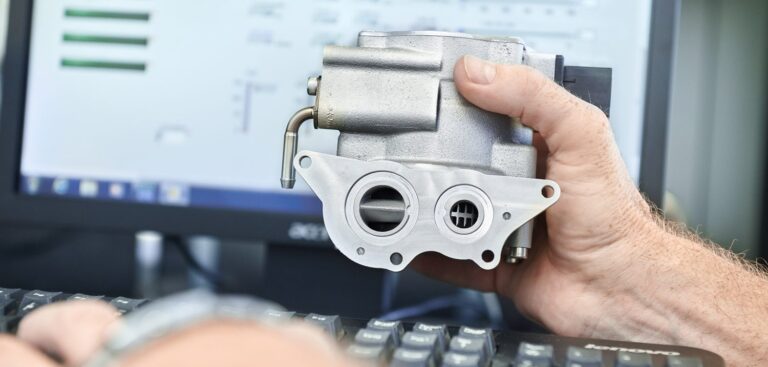
Von Pierburg entwickeltes Rezirkulationsgebläse für Brennstoffzellen in Niedervoltausführung
Share
LinkedIn Twitter Facebook Email

As part of the FC Komp funding project run by the German government, Pierburg, a member of the Rheinmetall Group, has announced it is involved in the development of a highly integrated, high-power fuel cell driveline.

Other partners in this project of the Federal Ministry of Transport and Digital Infrastructure and the German National Organization for Hydrogen and Fuel Cell Technology (NOW) are the car manufacturer BMW and the University of Siegen.

The Neuss-based automotive supplier says it is contributing a hydrogen recirculation blower, which is used to feed the hydrogen not consumed during the reaction in the fuel cell back into the stack. The blower thus increases the fuel cell’s efficiency and extends its service life. Moreover, by distributing the hydrogen homogeneously in the cell, it enables improved cold-start response. Pierburg says the blower was developed in both a low- and high-voltage version, up to 800V.

The project aims to reduce the high manufacturing costs of FC systems by using low-cost, space-saving components and incorporating a high level of integration. The ultimate goal, says Pierburg, is for an FC to be able to replace a combustion engine in the front of passenger cars without detrimental effects on weight or installation space.

“We are noticing increasing interest in the market from almost all manufacturers,” noted Dr Michael Becker, director for advanced engineering at Pierburg and coordinator of the company’s fuel cell activities. “This applies, on the one hand, to larger passenger cars and SUVs, and increasingly to commercial vehicles, buses and stationary applications.”

Share. LinkedIn Twitter Facebook Email

Related Posts

Major US hydrogen truck deployment announced by Toyota and Hyroad

May 7, 2026

Partnership to advance hydrogen mobility and research at Georgia Institute of Technology

April 30, 2026

Toyota fuel cells receive ANSI/CSA certification for stationary power applications

April 30, 2026
LATEST NEWS

Renault introduces LPG bi-fuel Clio that delivers up to 1,450km range

May 7, 2026

UK consortium secures funding for ReCAM lithium-ion battery recycling project

May 7, 2026

BorgWarner wins turbocharger contracts with two European OEMs

May 7, 2026

Receive breaking stories and features in your inbox each week, for free


Enter your email address:


Supplier Spotlights
  • Mitsubishi Heavy Industries Machine Tool (MAT)
Featured Listings
  • There are currently no listings to show.
Getting in Touch
  • Contact Us
  • Media Pack
  • Meet the Editors
  • Free Weekly E-Newsletter
Our Social Channels
  • LinkedIn
Related UKi Topics
  • Automotive Interiors
  • Automotive Testing
  • Autonomous Vehicle
  • Professional Motorsport
  • Tire Technology
  • Media Pack
© 2026 UKi Media & Events a division of UKIP Media & Events Ltd
  • Terms and Conditions
  • Privacy Policy
  • Cookie Policy
  • Notice and Takedown Policy

Type above and press Enter to search. Press Esc to cancel.