

A new study from the Tokyo University of Science is challenging the assumption that sodium-ion battery cells are inherently slower to charge than lithium-ion counterparts.
Published in Chemical Science, the paper reports that sodium-ion batteries (SIBs) using hard carbon (HC) anodes can be intrinsically faster-charging than lithium-ion batteries (LIBs) when the comparison is made on a like-for-like basis and without the test artifacts that typically influence high-rate measurements.
According to the researchers, conventional rate capability tests performed on composite electrodes can obscure the true kinetics of hard carbon. In particular, electrolyte and ion-transportation limitations within the electrode structure can dominate the measured response at high current, masking the underlying insertion behavior of the active material itself. To isolate the anode’s fundamental performance, the team adopted a diluted electrode approach designed to minimize electrolyte transportation effects and enable a quantitative comparison between sodium insertion (sodiation) and lithium insertion (lithiation).
With transportation constraints reduced, the researchers found sodiation to be intrinsically faster than lithiation in the same hard carbon negative electrode. The analysis also pointed to pore filling as the rate-determining mechanism, with sodium requiring lower energy than lithium to form pseudo-metallic clusters within hard carbon nanopores – an energetic advantage that translates directly into improved high-rate charging potential.
“Our results quantitatively demonstrate that the charging speed of an SIB using an HC anode can attain faster rates than that of an LIB,” said Prof. Shinichi Komaba, who led the research team, which included third-year PhD candidate Yuki Fujii, and Assistant Prof. Zachary Gossage from the university’s department of applied chemistry.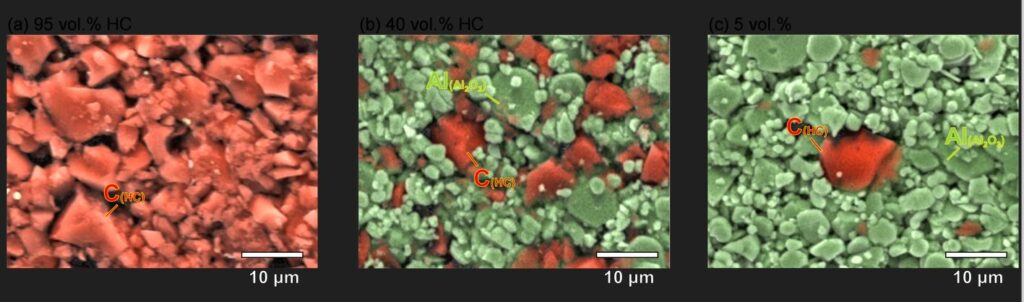
The team say that the result is not simply a lab curiosity, but a design direction. By accelerating the pore-filling kinetics in hard carbon, through materials engineering targeted at the nanopore structure, future SIB anodes could access even higher charge rates without relying on external mitigations.
“A key point of focus for developing improved HC materials for fast-chargeable SIBs is to attain faster kinetics of the pore-filling process so that they can be accessed at high charging rates,” Komaba added.
In related news, Ideal Semiconductor launches MOSFET for efficiency and safety in high-voltage battery systems