

Pushing fuel economy performance to its limits has become one of the core challenges for Chinese automotive manufacturers today. Fuel economy has become a deciding factor when purchasing a car.
Both consumer pressure and government regulations are driving OEMs to update their products. “New fuel consumption regulations are putting huge pressure on OEMs to improve traditional combustion engines and gearboxes and re-evaluate full vehicle energy management,” said LV Yuan, an engineer in the powertrain integration department at BAIC Motor.
Reducing dependency on fossil fuels makes sense for a myriad of reasons. To start, oil dependency makes countries extremely vulnerable to fluctuations in world oil prices and oil market shocks. History shows that oil price increases precede economic downturns, which in turn impact economic and foreign policies. Even with new drilling techniques, like hydraulic fracturing, fossil fuels are becoming scarcer every day. Eventually, the global supply will run out.
China has the largest automotive market in the world and a huge potential for more growth with almost 20% of the world’s population.
On top of this, China imports approximately two thirds of its oil reserves, leaving its economy extremely vulnerable to market shocks. According to the World Bank, 16 out of 20 of the world’s most polluted cities are located in China.
Confronting hard numbers like these have made an impact. For the past five years, the Chinese government has been taking decisive measures and is one of the leading countries in supporting electric car technology. The effort is starting to show results. For the first time in history, Chinese fossil fuel emissions are declining.
Still, while sales of hybrid and electric vehicles remain on the increase, the Chinese haven’t lost their taste for traditional gas-powered vehicles. Chinese highways remain heavily saturated with gas-powered cars. This is why optimizing for fuel efficiency remains at the top of the Chinese automotive industry’s agenda.
BAIC Motor is one of the oldest automobile manufacturers in China and plans to continue leading by example. When the company purchased Saab Automobile from General Motors in 2009, it had acquired valuable western know-how in its goal to secure a leading position in technology advancement and global resource integration.
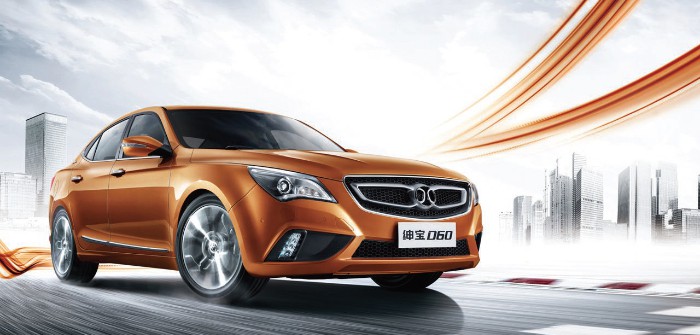
BAIC is able to spend a significant amount of resources on research. There is a team fully dedicated to fuel economy and vehicle energy management and there is a clear mandate to tackle all previously ignored blind spots as well. Facing substantial challenges, BAIC cooperated with Siemens’ LMS Engineering services to improve fuel-economy performance for the company’s D60.
“Since fuel economy standards are strict, we needed external resources to optimize fuel performance,” said Yuan. “Based on previous experiences as well as testimonials from other companies, we were convinced that LMS Engineering could bring added value to the table. Compared to other proposals, LMS Engineering offered the most complete solution and services.”
Relying on available prototypes to fix problems by trial and error was resource intense, causing BAIC to consider other alternatives. Model-based systems engineering (MBSE) turned out to be one of the best options. MBSE uses test data as input to develop a virtual system model. Targeted use of simulation can significantly reduce costs and save time when troubleshooting or developing a new product.
As a first step, the engineering team performed an elaborate series of full vehicle measurements on the BAIC car, the D60. These were then benchmarked against comparable vehicles from an established competitive brand. Testing took place on the test bench as well as on the proving ground with fully instrumented engines and gearboxes. The engineering teams ran several driving cycles, testing frequent speed changes as well as constant speeds over longer periods.
“This project featured both testing and simulation, which was new for us,” said Yuan. “The aim was to integrate the two to get the best possible results.”
Using a combination of test data and parameters provided by BAIC, the LMS Engineering team developed two 1D models using LMS Imagine.Lab Amesim software. Using this innovative 1D solution, the team could easily create two separate models to enable accurate engine representation under cold and hot operational conditions. To assess fidelity, both models ran the same driving cycles as the actual physical test runs.
Yuan explained: “The simulated driving cycles resembled the previously test recorded vehicle behavior meticulously. Looking at the graphs, we were truly impressed by the LMS simulation solution.”
After this, LMS Engineering services ran a sensitivity analysis to estimate the impact of certain parameter modifications. Each modification was accurately quantified according to fuel economy without deteriorating other performance attributes.
From this information, the LMS experts created a shortlist of recommendations. A set of predictive models was provided for each recommendation, allowing BAIC to make an informed decision regarding the D60 design and integration.
“In the end, we implemented four of the proposed recommendations,” says Yuan. “We reduced the friction coefficients at the chassis level, which increased fuel efficiency by 3%. We also optimized the temperature control of the air intake system, delivering another 1%.”
“Working with LMS Engineering services has helped us restructure and refine our development process,” noted Yuan. “We are determined and ready to take on previously ignored problems. We will definitely keep setting ambitious targets, beyond fuel economy and durability performance.”
For now, working with LMS Engineering has helped BAIC build its reputation as a leading automotive supplier in China. Slowly but surely, the company has started to pursue an even more ambitious goal: closing the gap with European automotive brands and claiming a share of the global market.