
Close Menu
  • News
      • Appointments
      • EV Powertrain
      • Emissions
      • Engine Components
      • Electronics
      • Facility Developments
      • Forced Induction
      • Fuel Cell Technologies
      • Fuels & Lubricants
      • Heavy-duty & Diesel Engine Technologies
      • Hybrid Powertrain Technologies
      • Industry Forecasting
      • Legislation
      • Materials & Surface Treatment
      • Metallurgy
      • Mild-hybrid & 48V Technologies
      • New powertrain
      • Partnerships, Investments & Acquisitions
      • Quality Control
      • Prototyping
      • Sustainable fuels
      • Testing
      • Traction Control Systems
      • Transmissions Technologies
      • Webinars
  • Features
  • Online Magazines
    • April 2026
    • January 2026
    • September 2025
    • June 2025
    • March 2025
    • January 2025
    • September 2024
    • Subscribe to Automotive Powertrain Technology
    • Transmission Technology International
    • Subscribe to Transmission Technology
  • Opinion
  • Events
  • Supplier Spotlight
  • Webinars
Facebook X (Twitter) Instagram
  • Automotive Interiors
  • Automotive Testing
  • Autonomous Vehicle
  • Professional Motorsport
  • Tire Technology
  • Media Pack
LinkedIn
Subscribe
Automotive Powertrain Technology International
  • News
      • Appointments
      • EV Powertrain
      • Emissions
      • Engine Components
      • Electronics
      • Facility Developments
      • Forced Induction
      • Fuel Cell Technologies
      • Fuels & Lubricants
      • Heavy-duty & Diesel Engine Technologies
      • Hybrid Powertrain Technologies
      • Industry Forecasting
      • Legislation
      • Materials & Surface Treatment
      • Metallurgy
      • Mild-hybrid & 48V Technologies
      • New powertrain
      • Partnerships, Investments & Acquisitions
      • Quality Control
      • Prototyping
      • Sustainable fuels
      • Testing
      • Traction Control Systems
      • Transmissions Technologies
      • Webinars
  • Features
  • Online Magazines
    1. April 2026
    2. January 2026
    3. September 2025
    4. June 2025
    5. March 2025
    6. January 2025
    7. September 2024
    8. Subscribe to Automotive Powertrain Technology
    9. Transmission Technology International
    10. Subscribe to Transmission Technology
    Featured

    In this Issue – April 2026

    By Web TeamMay 1, 2026
    Recent

    In this Issue – April 2026

    May 1, 2026

    In this Issue – January 2026

    December 3, 2025

    In this Issue – September 2025

    September 25, 2025
  • Opinion
  • Events
  • Supplier Spotlight
  • Webinars
LinkedIn Facebook
Subscribe
Automotive Powertrain Technology International
Sustainable ICE Symposium

Dr Byron Mason, senior lecturer in advanced propulsion at Loughborough University, highlights the benefits of multi-objective dynamic optimization

Sam PettersBy Sam PettersMay 29, 20191 Min Read
LinkedIn Twitter Facebook Email
Share
LinkedIn Twitter Facebook Email

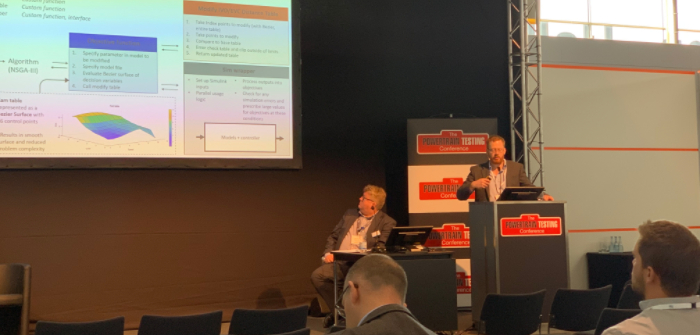
The Powertrain Testing Conference, held at the 2019 Engine Expo + The Powertrain Technology Show in Stuttgart, saw Dr Byron Mason, senior lecturer in advanced propulsion at Loughborough University, detail the benefits that an analytical, robust, multi-objective dynamic optimization approach can have in the quest for greater engine performance for real-world driving.

According to Mason, his work determining the dynamic variable valve timing calibration of a downsized 1.0-liter SI engine has shown that the current calibration approaches fail to consider system time-dependent behavior (dynamics).

“Through dynamic characterization we are able to significantly reduce test times. It is a far faster process compared to the conventional approach,” said Mason. “The optimization approach that we developed doesn’t give you the best option, it gives you a number of best options, which can then be chosen from.”

The simulation results produced by Mason and his team, when looking at the valve timing calibration of a downsized 1.0-liter SI engine, highlighted the dominance of both fuel and NOx objectives, showing notably reduced fuel consumption and engine-out NOx emissions.

Overall, Mason found that the experimental results confirm that NOx emissions can be reduced with no detriment to fuel economy over the transient investigated.

Share. LinkedIn Twitter Facebook Email

Related Posts

Horse announces production of 1.3-liter Turbo Flex Fuel engines in Brazil

September 3, 2024

Review: First ever Sustainable Internal Combustion Engine Virtual ‘Live’

February 16, 2021

Sustainable Internal Combustion Engine Virtual ‘Live’ – opens next week!

January 28, 2021
LATEST NEWS

Renault introduces LPG bi-fuel Clio that delivers up to 1,450km range

May 7, 2026

UK consortium secures funding for ReCAM lithium-ion battery recycling project

May 7, 2026

BorgWarner wins turbocharger contracts with two European OEMs

May 7, 2026

Receive breaking stories and features in your inbox each week, for free


Enter your email address:


Supplier Spotlights
  • ETO GRUPPE
Featured Listings
  • There are currently no listings to show.
Getting in Touch
  • Contact Us
  • Media Pack
  • Meet the Editors
  • Free Weekly E-Newsletter
Our Social Channels
  • LinkedIn
Related UKi Topics
  • Automotive Interiors
  • Automotive Testing
  • Autonomous Vehicle
  • Professional Motorsport
  • Tire Technology
  • Media Pack
© 2026 UKi Media & Events a division of UKIP Media & Events Ltd
  • Terms and Conditions
  • Privacy Policy
  • Cookie Policy
  • Notice and Takedown Policy

Type above and press Enter to search. Press Esc to cancel.